
” The best way to find yourself is to lose yourself in the service of others. “
– Mahatma Gandhi
Amid ongoing escalation and uncertainty across Palestine and the wider region, communities continue to face increasing pressure on their safety, wellbeing, and daily lives.
At Holy Land Trust, we see resilience not as a concept, but as a daily practice — built through community action, strong relationships, and the ability to respond to challenges in conscious and practical ways.
This month, our work continued to focus on strengthening this capacity: supporting women’s leadership and civic engagement, equipping youth with tools for active participation, enhancing community preparedness, and responding to urgent needs on the ground.
In a context where space, movement, and access are increasingly restricted, sustaining dignity and hope requires more than short-term interventions. It requires consistent, community-based efforts that enable people to navigate reality while maintaining agency and connection.
We believe that investing in locally led, trauma-informed approaches is essential — not only to respond to current challenges, but to build foundations for long-term resilience.
Below are the highlights of our activities implemented from 15–30 April 2026
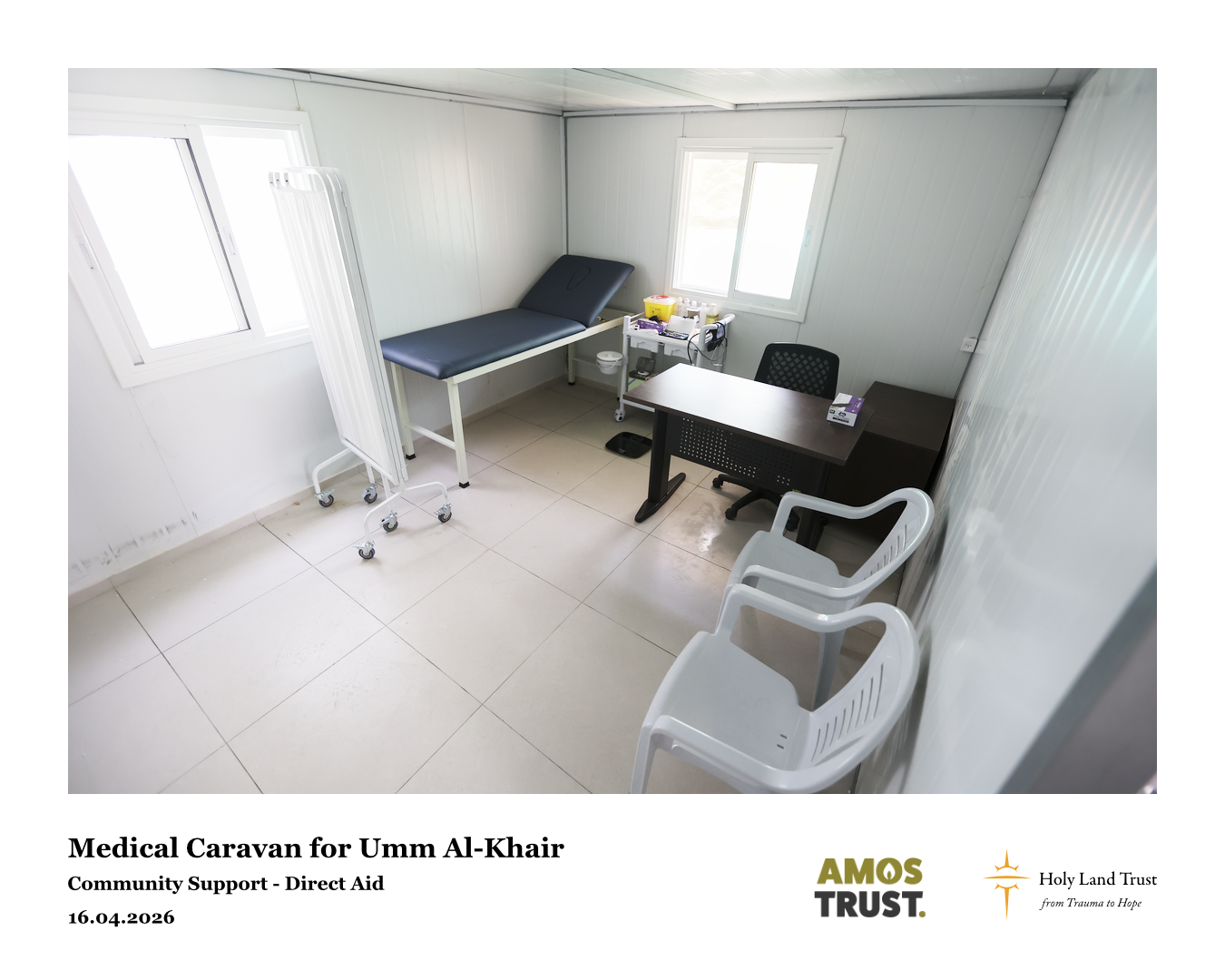
As part of its ongoing commitment to supporting marginalized communities in Area C of the West Bank, Holy Land Trust is proud to announce the launch of a new medical caravan in the village of Umm Al-Khair, located in the Southern Hebron Hills.
Communities in this area continue to face daily challenges due to systemic restrictions, limited access to basic services, and ongoing violations by Israeli settlers and military forces. In response to these conditions, and through our Direct Aid Program, Holy Land Trust has worked closely with the community of Umm Al-Khair to address urgent humanitarian needs.
Recognizing the critical lack of accessible healthcare , this initiative establishes a permanent, fully equipped medical caravan that will serve as a dedicated space for visiting doctors and healthcare providers to deliver essential medical services. The caravan is furnished with necessary equipment and supplies to ensure a safe, hygienic, and functional environment for both patients and practitioners.
This achievement has been made possible through the generous support of our strategic partner Amos Trust , and reflects a shared commitment to dignity, resilience, and community wellbeing.
The medical caravan is expected to directly benefit over 300 residents, providing consistent access to primary healthcare services and contributing to improved health outcomes in a highly underserved and vulnerable area.
Through this initiative, Holy Land Trust continues to stand in solidarity with the people of Umm Al-Khair , working to ensure that even in the most challenging contexts, communities have access to the care and dignity they deserve.
As part of the ongoing Generation to Generation project, implemented in partnership with Bethlehem University and funded by the Ministry of Foreign Affairs of the Netherlands , the seventh session was held on April 18, 2026, focusing on the Spiritual Questionnaire .
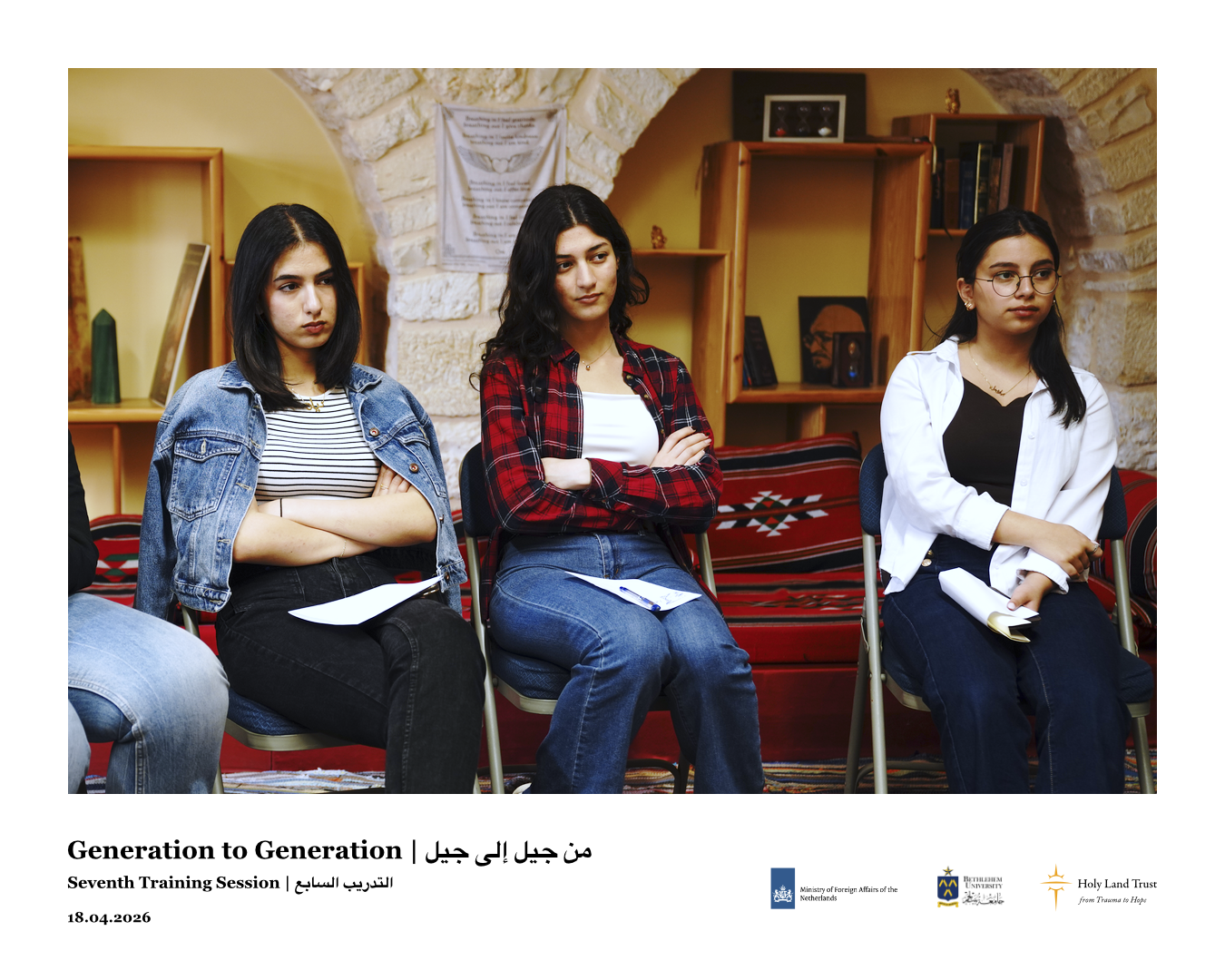
The session created a reflective and safe space for participants to explore their personal values, beliefs, and inner experiences. Through guided discussions and structured self-reflection exercises , participants engaged deeply with their own stories while connecting them to the broader collective context.
The session encouraged openness and authentic emotional expression , allowing participants to better understand themselves and one another. This process contributed to strengthening self-awareness, emotional resilience, and a sense of inner strength, reinforcing the program’s approach of transforming personal and collective trauma into hope.
As part of the Women of Dialogue: Reclaiming Civic Space and Building Community Resilience in Jerusalem and the West Bank project, a series of targeted trainings were delivered across four different groups in Bethlehem, Ramallah, and Jerusalem.
These trainings were implemented in partnership with ACT for Conflict Resolution , Jerusalem Center for Women , and Tomorrow’s Women , and funded by the European Union and implemented by Expertise France . The activities aimed to strengthen women’s leadership, enhance psychosocial resilience, and build practical skills in dialogue, mediation, and trauma-informed engagement.
Bethlehem Group
The Bethlehem group Holy Land Trust participated in multiple trainings focusing on conflict transformation and communication skills.
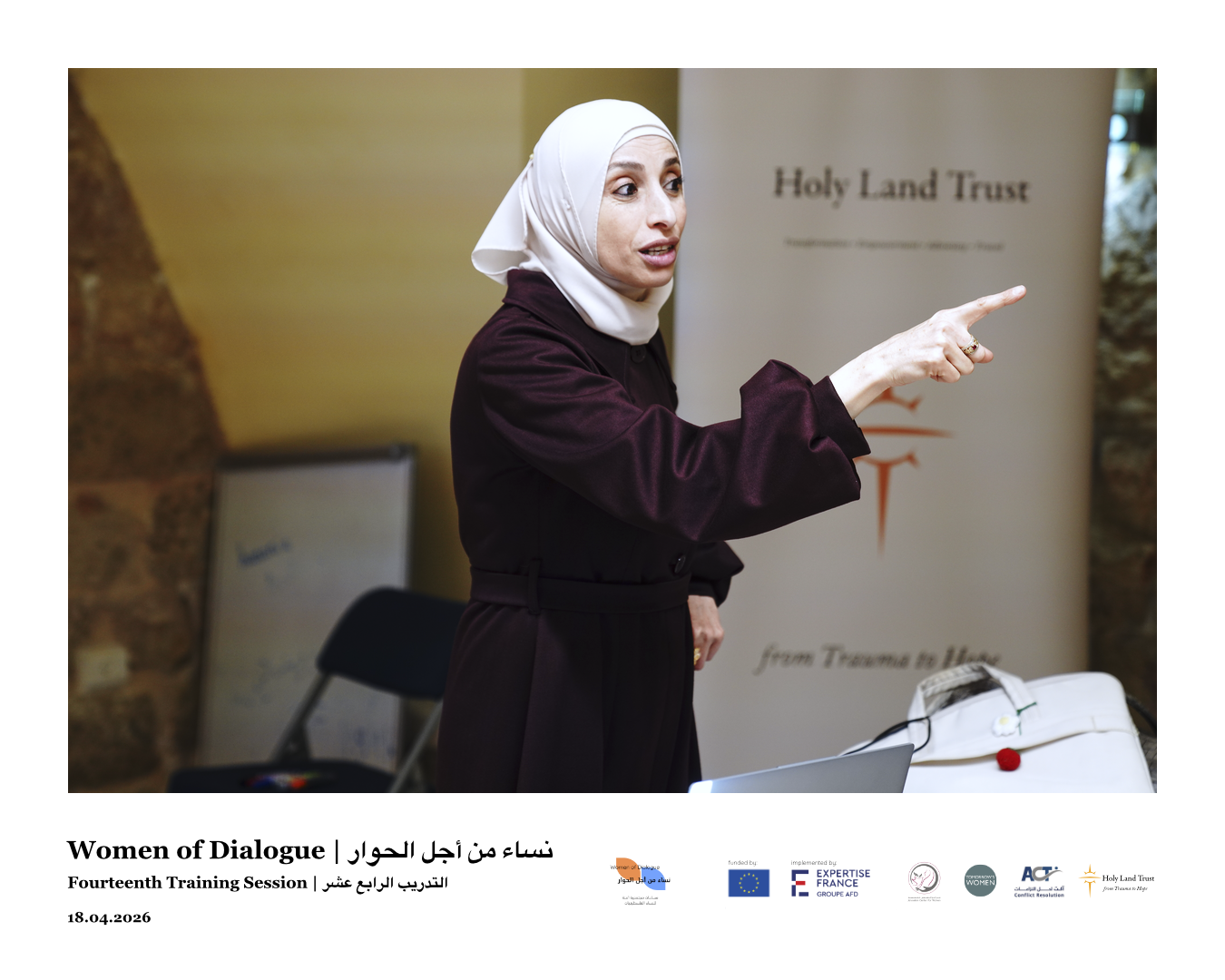
On April 16 and 18, 2026 , participants attended a Mediation Training, implemented by ACT for Conflict Resolution and facilitated by Mai Abu Ghazaleh . The sessions introduced mediation as a constructive and collaborative approach to conflict resolution, emphasizing active listening, neutrality, and joint problem-solving.
On April 23 and 25, 2026 , the group received a Negotiation Training, implemented by ACT for Conflict Resolution and facilitated by Muhammad Hadieh , focusing on practical negotiation techniques, managing disagreements, and reaching mutually beneficial outcomes through dialogue.
Ramallah Group
The Ramallah-based group Tomorrow’s Wome n engaged in a comprehensive training on psychosocial support and community resilience.
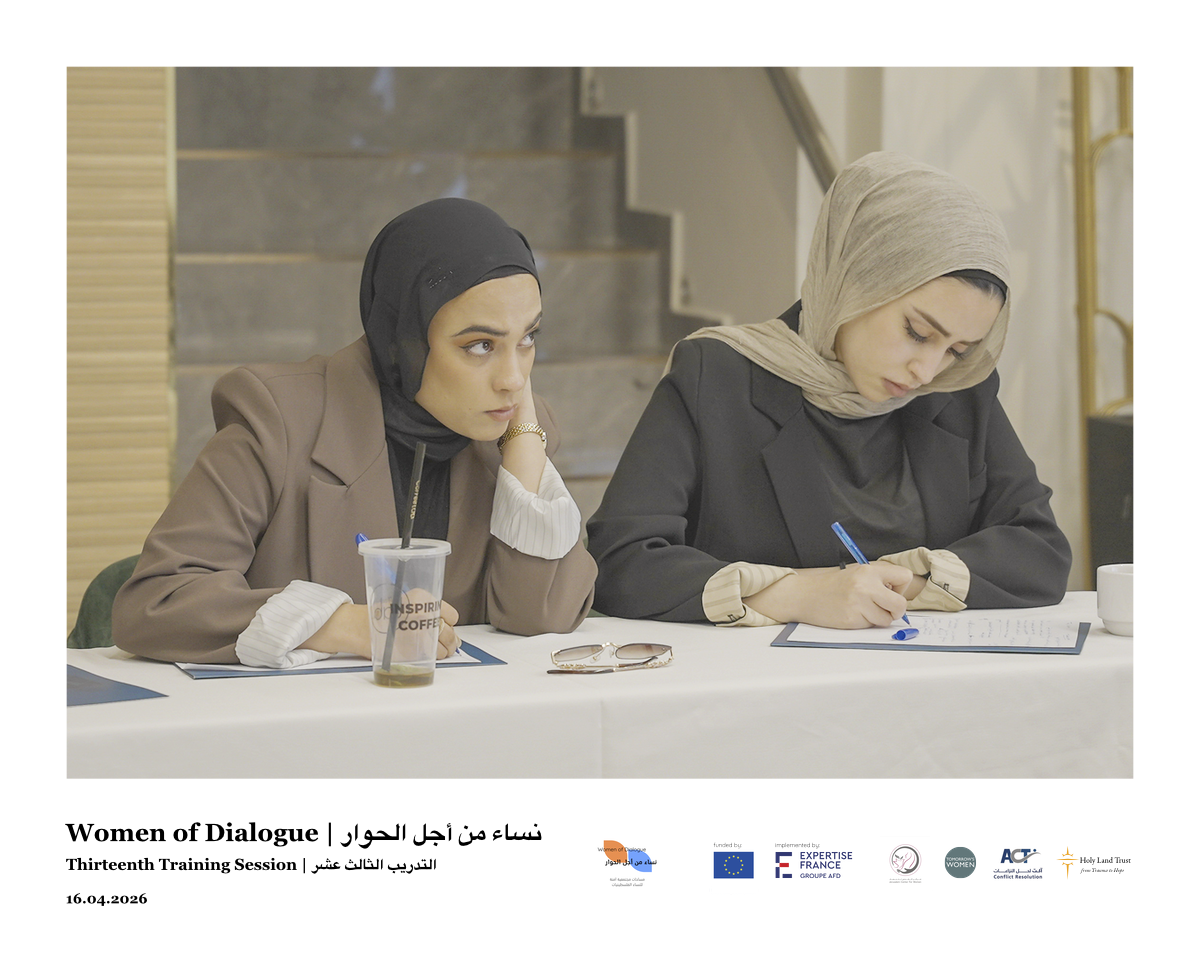
On April 16, 18 and 23 2026 , participants took part in a Psychosocial Support and Social Cohesion Training, implemented by the Jerusalem Center for Women . The training focused on strengthening empathy, trust-building, and communication skills, while equipping participants with tools to support individuals experiencing stress and to foster inclusive and resilient communities.
Jerusalem Group (Inside the Wall)
The Jerusalem group ACT for Conflict Resolution received specialized training focused on trauma awareness and response.
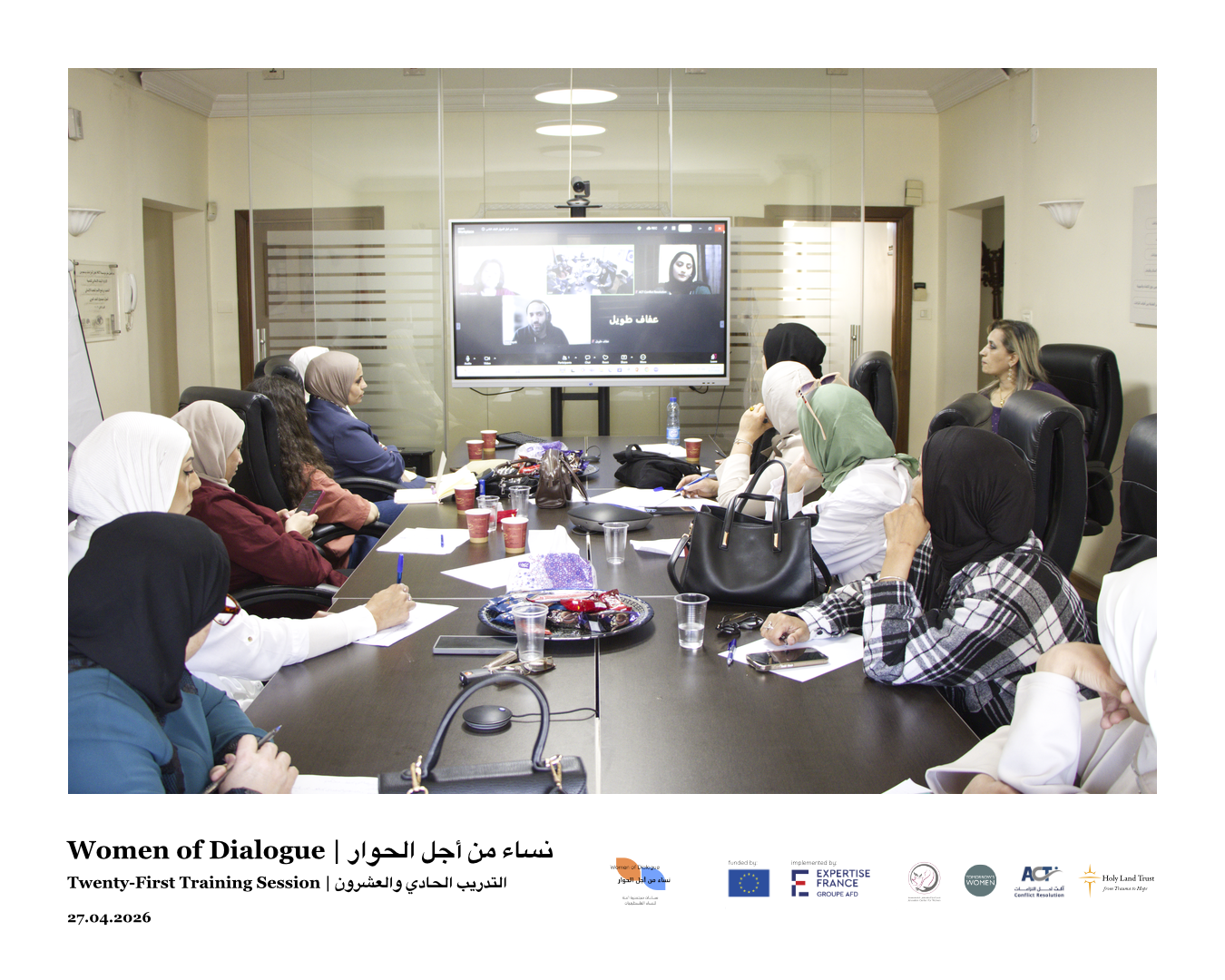
On April 25 and 27, 2026 , participants attended a Trauma-Informed Care Training implemented by Holy Land Trust and facilitated by Issa Hayek . Delivered online, the sessions focused on understanding trauma and its impact, while providing practical tools to respond in ways that promote dignity, safety, and emotional awareness.
Jerusalem Group (Outside the Wall)
An additional group of Jerusalem participants from Jerusalem Center for Women received further capacity building in trauma-informed practices.
On April 29 and 30, 2026 , a Trauma-Informed Care Training was conducted in Ramallah, implemented by Holy Land Trust and facilitated by Issa Hayek . The training deepened participants’ understanding of trauma-sensitive approaches and strengthened their ability to create supportive and resilient environments within their communities.
Holy Land Trust resumed the implementation of the Creative Voices project following a temporary pause due to the circumstances imposed by the war, including a period of online learning to ensure students’ safety, as well as school holidays related to festive occasions. The project is implemented in partnership with the Greek Catholic Patriarchate School Peter Nettekoven – Beit Sahour and targets 20 tenth-grade students, aiming to develop their personal capacities and enhance their life skills, strengthen their sense of social responsibility, and enable them to design and implement community initiatives.
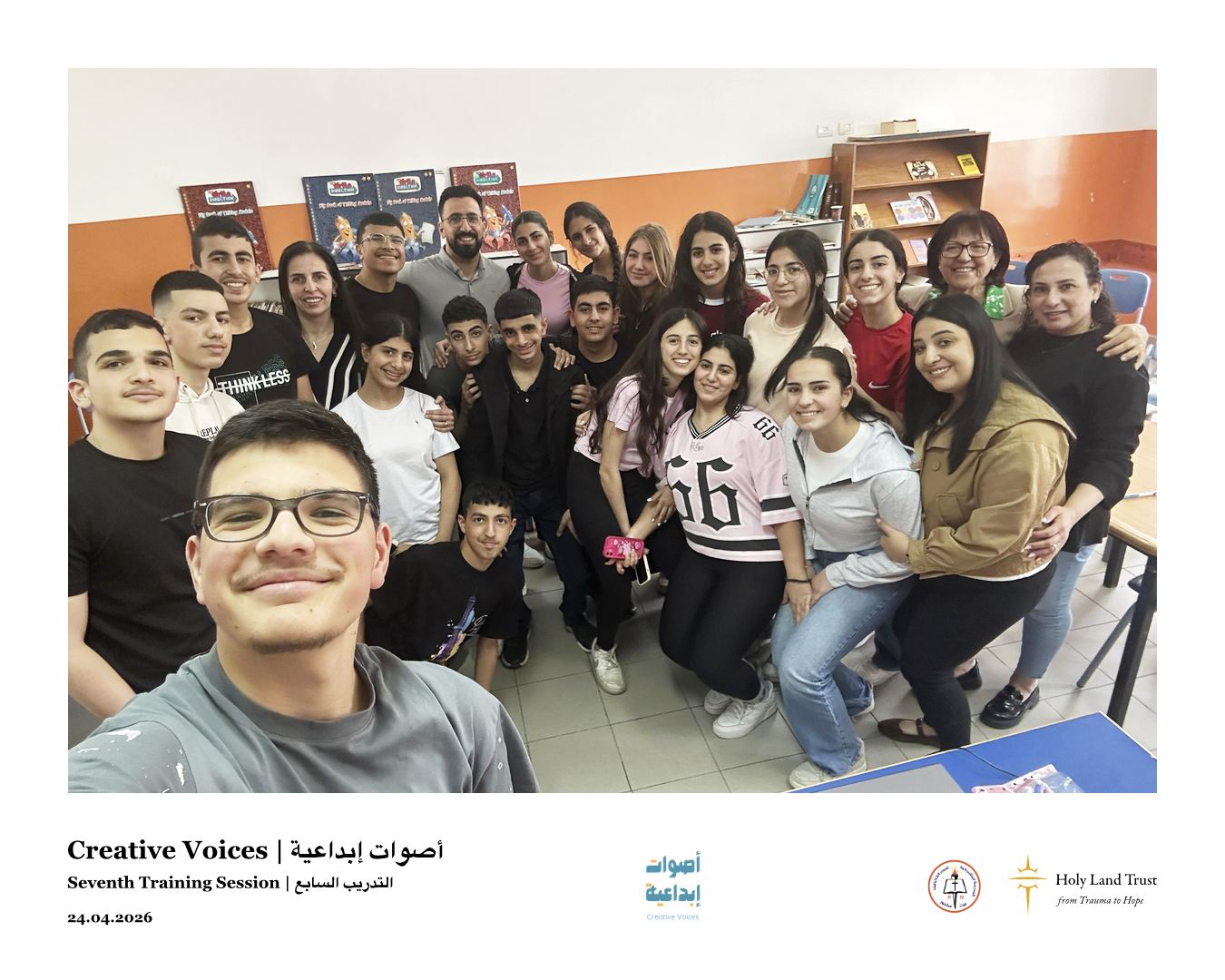
In this context, two consecutive training sessions were conducted:
The first session, held on April 17, 2026, and delivered by trainer Ahmad Deriyeh , focused on exploring the traits and characteristics of a leadership personality , with an emphasis on initiative, self-confidence, and decision-making skills.
It also included practical activities aimed at developing effective communication skills, enabling students to express their ideas clearly and build positive relationships.
The second session, held on April 24, 2026, and delivered by Dr. Elias Kokaly , focused on designing and implementing initiatives by observing and identifying needs within the local community and the school environment. Students were trained through professional and progressive methods that included observation skills, needs assessment, and practical approaches to building initiatives in a realistic and structured way through precise planning.
They also learned how to measure outcomes to evaluate the success and effectiveness of their initiatives. The session was highly engaging and impactful, leaving a positive impression on the participating students.
Holy Land Trust recently held a meeting on 28 April in Ramallah as part of the Community Preparedness – Dignity Resilience Safety project, funded by the Ministry of Foreign Affairs of the Netherlands , with the participation of the Palestinian Police , including representatives from Training Department, Community Policing, Criminal Investigation Department, and Police College trainers, alongside experts across the three training pillars: De-escalation of Settler Violence, Psychological First Aid, and Effective Witnessing & Documentation.
The meeting focused on developing a practical, field-oriented training manual that responds to the needs of local communities, strengthens individual safety, and upholds dignity, while highlighting the importance of building trust between communities and the Palestinian Authority Security Forces (PASF) , and enhancing people’s ability to respond to challenges in a conscious and safe manner.
A key outcome of the meeting was the agreement to adopt a scenario-based training approach , developed in partnership with specialized stakeholders, to ensure that participants gain practical skills that can be applied in real-life situations.
This meeting marks an important step in the development of the training manual. The next phase will focus on improving the content in collaboration with partners and experts, ahead of the Training of Trainers (ToT).
The training will then be delivered by the Palestinian Police and Civil Defense to 10 communities in Bethlehem and Hebron , supporting those most affected on the ground by settler violence.

Your support enables practical, community-led responses that strengthen resilience, expand safe spaces, and sustain dignity in the face of ongoing challenges.
Hope becomes real when it is translated into action—through people, through community, and through the choices we make every day.
Elias Deis,
EXECUTIVE DIRECTOR