
” Palestinian women have been at the forefront of the struggle for liberation, democracy, and human rights. They bring courage, creativity, and a commitment to justice. “
– Hanan Ashrawi
As the season of spring arrives, communities across Palestine welcome a time filled with meaning and renewal. This year, Eid al-Fitr — the Muslim celebration marking the end of Ramadan and a time of gratitude, generosity, and community — joins with Mother’s Day and the arrival of spring toremind us of resilience, care, and the promise of new beginnings.
In Bethlehem and across the region, families mark these occasions by gathering with loved ones, honoring the strength of mothers, and embracing thehope that accompanies the changing season. Spring symbolizes renewal — an opportunity to reflect on the past months and move forward with courage and compassion.
At Holy Land Trust, this season reflects the very heart of our mission: transforming trauma into hope. Through trauma-informed approaches , leadership development , creative expression , and community-based initiatives , the organization strengthens resilience, promotes social cohesion, and supports communities in building pathways toward dignity, safety, and sustainable wellbeing.
As nature renews itself, so too does the commitment of our community to nurture understanding, healing, and solidarity.
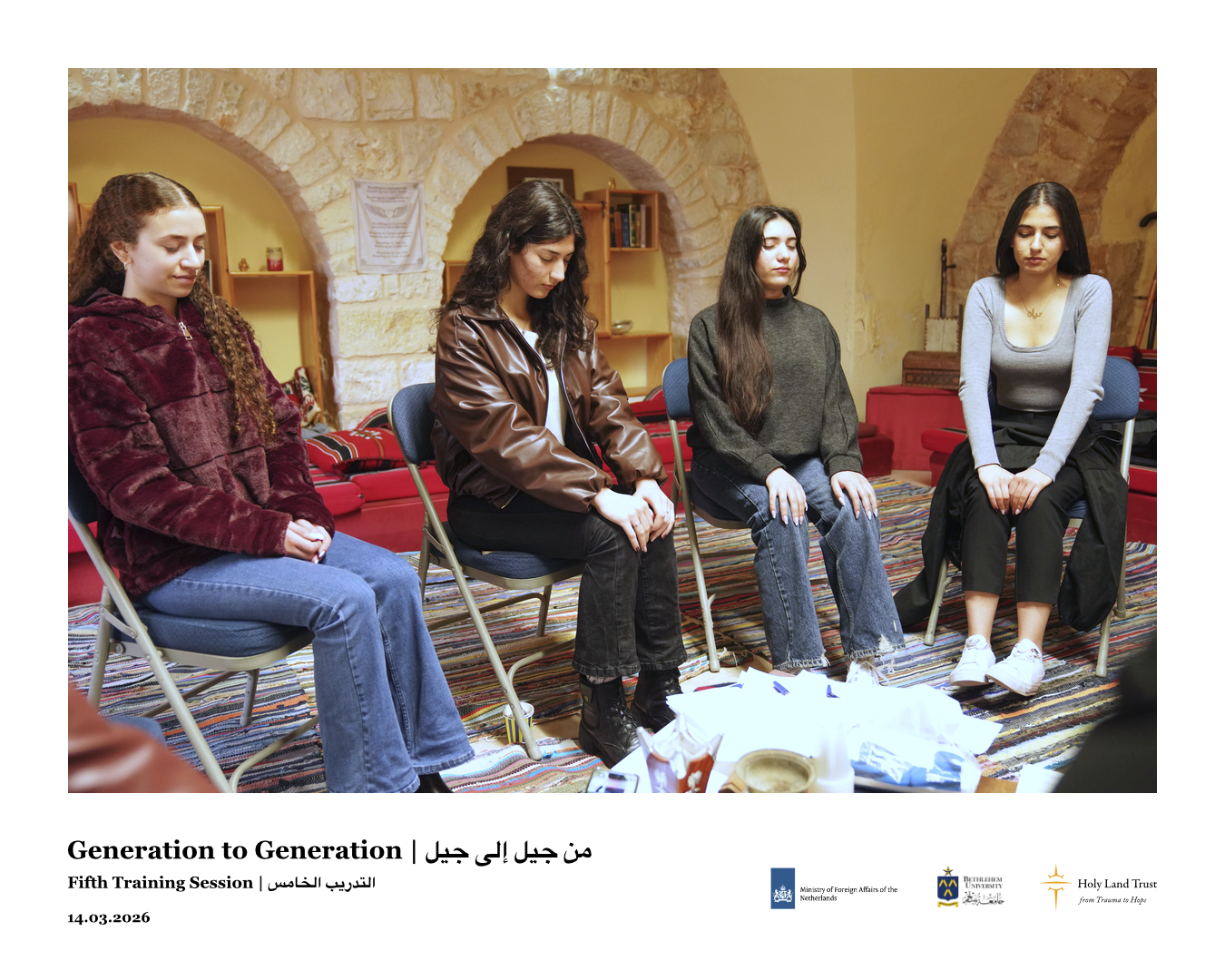
Deep Listening and Reflection among Youth Participants
During the recent Generation to Generation session, participants engaged in a reflective exercise centered on the spiritual questionnaire — an opportunity to explore their inner world and personal journeys in a safe and respectful space.
The discussion invited participants to look inward and reflect on the personal and spiritual conflicts that shape their lives today. Rather than approaching the realities of the ongoing situation as a political discussion, participants were encouraged to speak from their own experiences and emotions , sharing what weighs on their hearts and minds.
Many began by recalling significant moments in their lives—events that shaped their understanding of the world and influenced the paths they chose. These stories opened the door to deeper conversations about belonging and identity , as participants reflected on the communities that shape them: family, faith, culture, and national identity. For some, this sense of belonging is a source of strength and pride; for others, it raises questions about responsibility, expectation, and choice.
The conversation also touched on the uncertainty of the future . Participants shared their fears and anxieties, particularly in light of the realities that have unfolded since the beginning of the war. At the same time, they reflected on what sustains their hope — whether through faith, relationships, or the resilience of their communities.
Another part of the dialogue focused on moments of hardship. Participants spoke about experiences of emotional, psychological, or spiritual struggle and reflected on what helped them endure those moments. In many cases, it was the presence of supportive people, meaningful practices, or a deep inner strength that allowed them to continue moving forward.
The reflection concluded by inviting participants to think about the people who shape their daily lives today — individuals whose presence provides guidance, comfort, or inspiration.
Through this process, participants were encouraged to return to the central question that brought them to the reflection in the first place: their own inner conflict or need. After sharing and listening to one another, many discovered that their understanding of this inner struggle had already begun to evolve.
By creating space for honest reflection and compassionate listening, the Generation to Generation project continues to help young people transform inner conflict into deeper understanding, resilience, and connection with others .
As part of the Women of Dialogue project, led by Holy Land Trust, in partnership with ACT for Conflict Resolution, Jerusalem Center for Women and Tomorrow’s Women, we delivered a powerful two-day Compassionate Listening training led by Lama Abu Arqoub from Tomorrow’s Women for 15 participants in Ramallah.
The training focused on deep listening, empathy, and creating a safe space for sharing, equipping participants with tools to engage meaningfully and compassionately with others. Through interactive exercises, participants practiced active listening and reflection techniques, exploring how compassionate listening strengthens dialogue, builds trust, and empowers women to share their experiences in a supportive environment.
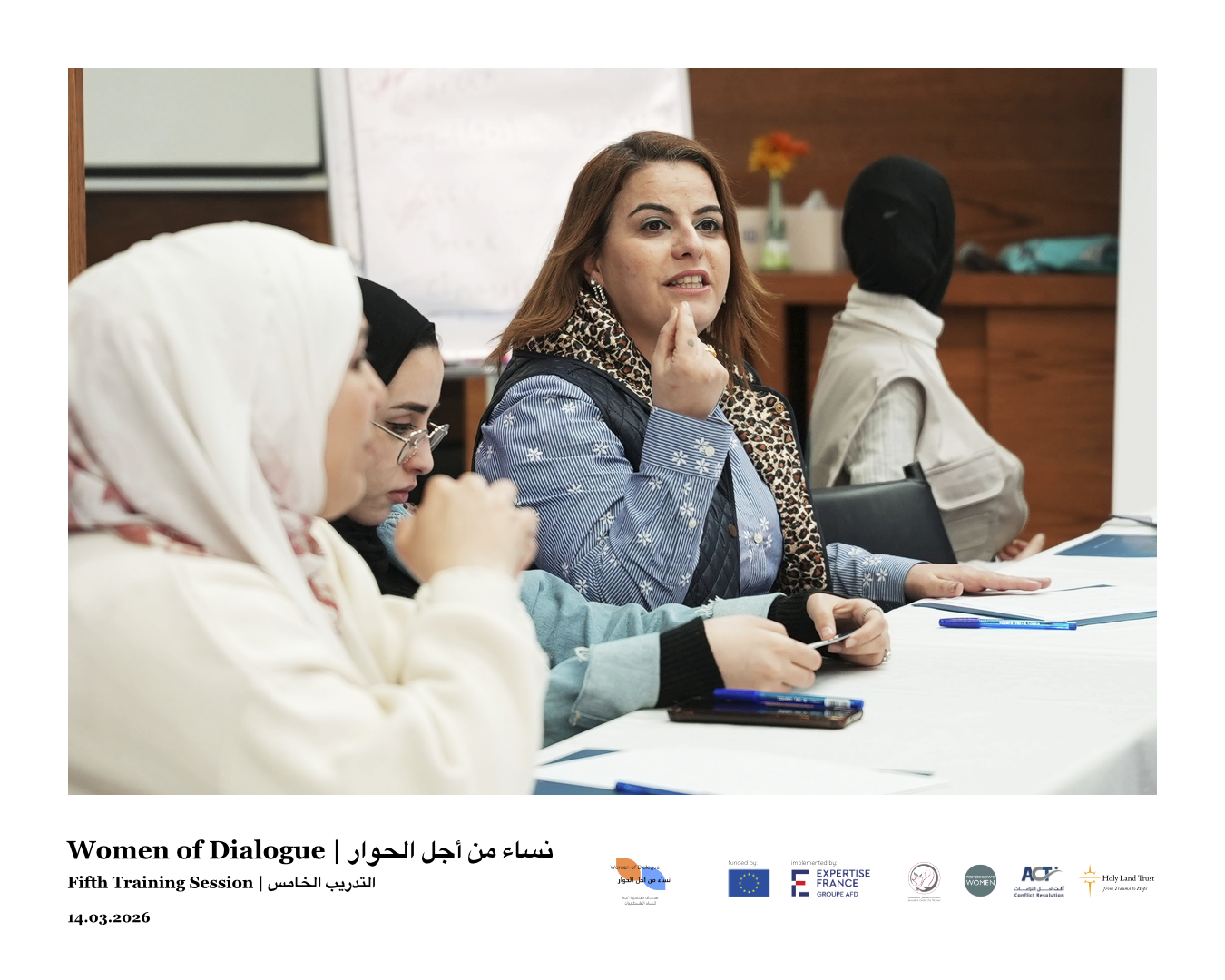
The trainer guided the group in connecting deeply with their own emotions and those of others, emphasizing self-awareness, emotional presence, and creating a respectful, empathetic space — essential skills for fostering constructive dialogue and understanding across communities.
This session marked an important step for the Ramallah group in developing stronger communication skills and cultivating meaningful relationships that inspire change within their communities.
The project is funded by the European Union and implemented by Expertise France .

With ongoing economic hardship affecting many families in the Bethlehem area, programs that nurture resilience, dialogue, and emotional healing are more important than ever.
Holy Land Trust continues to provide safe spaces for youth, empower women, and support vulnerable families through community-based initiatives.
Your contribution helps sustain these efforts and ensures that hope continues to grow within our communities.
Every act of support helps create a space where people feel heard, valued, and empowered to move from trauma toward hope.
Elias Deis,
EXECUTIVE DIRECTOR