
Staying, Rebuilding, Preparing: Community Resilience Under Pressure
” Our land is not only soil; it is memory, it is dignity, it is our future. To remain here is to resist, to hope, and to build together. “
– Hanan Ashrawi
The recent decisions taken by the Israeli Security Cabinet signal a critical escalation in policies shaping life across the West Bank. By expanding Israeli authority over planning, construction, and enforcement not only in Area C, but increasingly in Areas A and B, these measures further restrict Palestinian communities’ ability to build, remain, and develop on their land. International reporting and monitoring bodies have warned that such steps consolidate control on the ground and intensify the risks of displacement and fragmentation of Palestinian society.
For Holy Land Trust, these political developments are not distant headlines. They directly affect our home rebuilding initiatives, particularly in Area C, where families face mounting legal, administrative, and financial barriers to constructing or rehabilitating their homes. Each new restriction increases the vulnerability of families striving to stay rooted on their land, making community-based support more urgent than ever.
At the same time, these realities deeply shape the lives of youth and young women , who are growing up in an environment defined by uncertainty, shrinking space, and constant pressure. Holy Land Trust’s work with youth and girls focuses on equipping them with the tools to understand their context, strengthen their sense of agency, and respond to challenges collectively rather than in isolation. In moments where policies aim to limit possibility, investing in young people becomes an act of long-term resilience.
This is where Holy Land Trust’s Community Preparedness project takes on renewed significance. The project is designed to support communities not only in responding to immediate risks—such as home demolitions, displacement threats, or sudden policy changes—but also in building the internal capacity to prepare, adapt, and act together. Through awareness sessions, community coordination, youth engagement, and practical preparedness planning, the project strengthens collective readiness in the face of political and structural shocks.
Rather than reacting after harm occurs, community preparedness enables families, youth, and local leaders to anticipate challenges, support one another, and safeguard their presence on the land. It connects home rebuilding efforts with social resilience, and individual stories with a shared community response.
As the political landscape continues to shift rapidly, Holy Land Trust remains committed to standing with communities at this crossroads—supporting their right to remain, to rebuild, and to prepare for the challenges ahead with dignity, solidarity, and purpose.
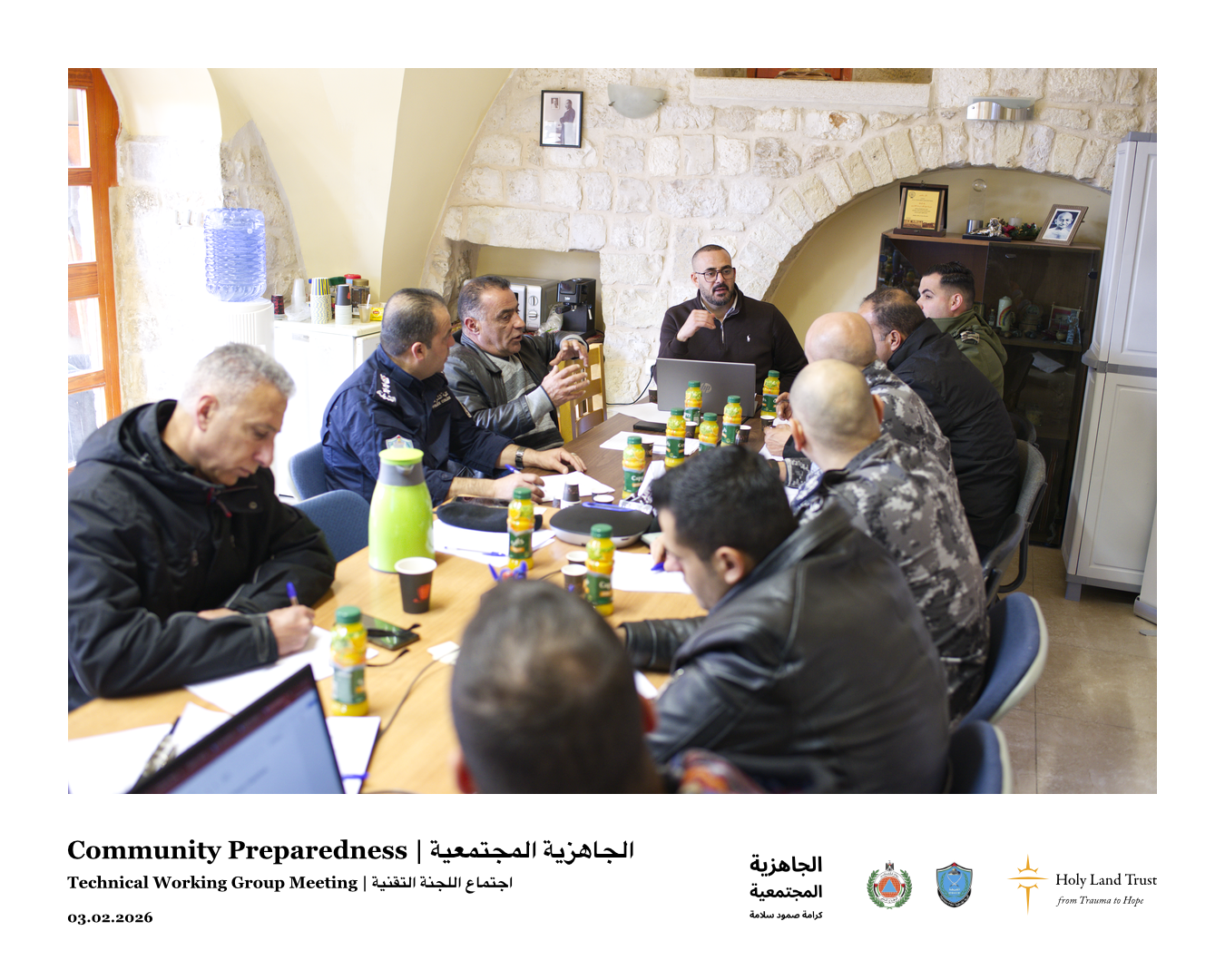
Holy Land Trust held on 2 February 2026 the second meeting of the Technical Working Group for the Community Preparedness – Dignity Resilience Safety project, at Holy Land Trust offices in Bethlehem, with the aim of practically initiating the development of the training curriculum dedicated to teams and personnel of the Palestinian Police and the Palestinian Civil Defense.
The project aims to strengthen protection, resilience, and trust within Palestinian communities in Areas B and C, through enhancing coordination and direct interaction between citizens and security institutions, raising the level of emergency preparedness, and integrating trauma-informed approaches within the security sector.
The training themes will focus primarily on de-escalating settler attacks in ways that contribute to protecting the lives of citizens and ensuring their safety, strengthening effective and responsible mechanisms for documenting violations in accordance with approved professional frameworks, and preserving the dignity of Palestinian citizens through integrating mental health concepts, addressing trauma, and strengthening recovery and resilience.
The meeting also focused on selecting the targeted areas within the project’s implementation plan, in a manner that ensures responsiveness to on-the-ground needs and enhances the impact of interventions.
This work is carried out within a project funded by the Ministry of Foreign Affairs of the Netherlands , and implemented in partnership with the Palestinian Police, the Palestinian Civil Defense, and the Office of the Security Coordinator .
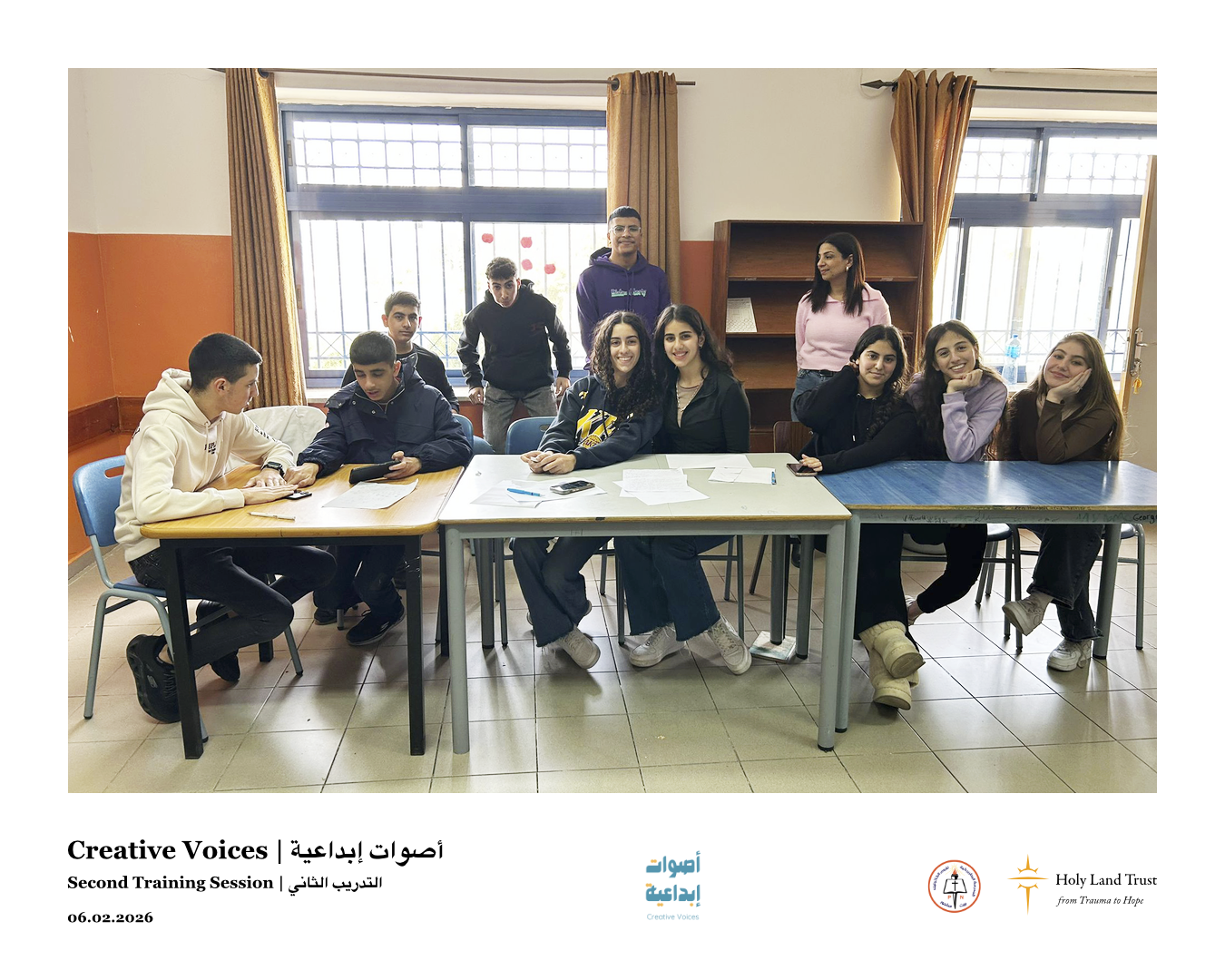
The second training session was held on Friday, 6 February 2026, focusing on debates, advocacy, and public speaking as key tools to strengthen students’ confidence and ability to express their views responsibly .
These topics support the development of critical and analytical thinking, active listening, constructive dialogue, and effective communication. Students showed strong engagement and active participation throughout the discussions.
On Saturday, 7 February 2026, Holy Land Trust officially launched the 5th edition of the Generation to Generation project, funded by the Ministry of Foreign Affairs of the Netherlands under the project “Grassroots to Global: The Voice of Communities Reaching the World,” and implemented in partnership with Bethlehem University .
This project aims to enable women and youth to strengthen resilience and recovery, and to influence policymaking through regional and international advocacy, advancing a more just and dignified life for all.
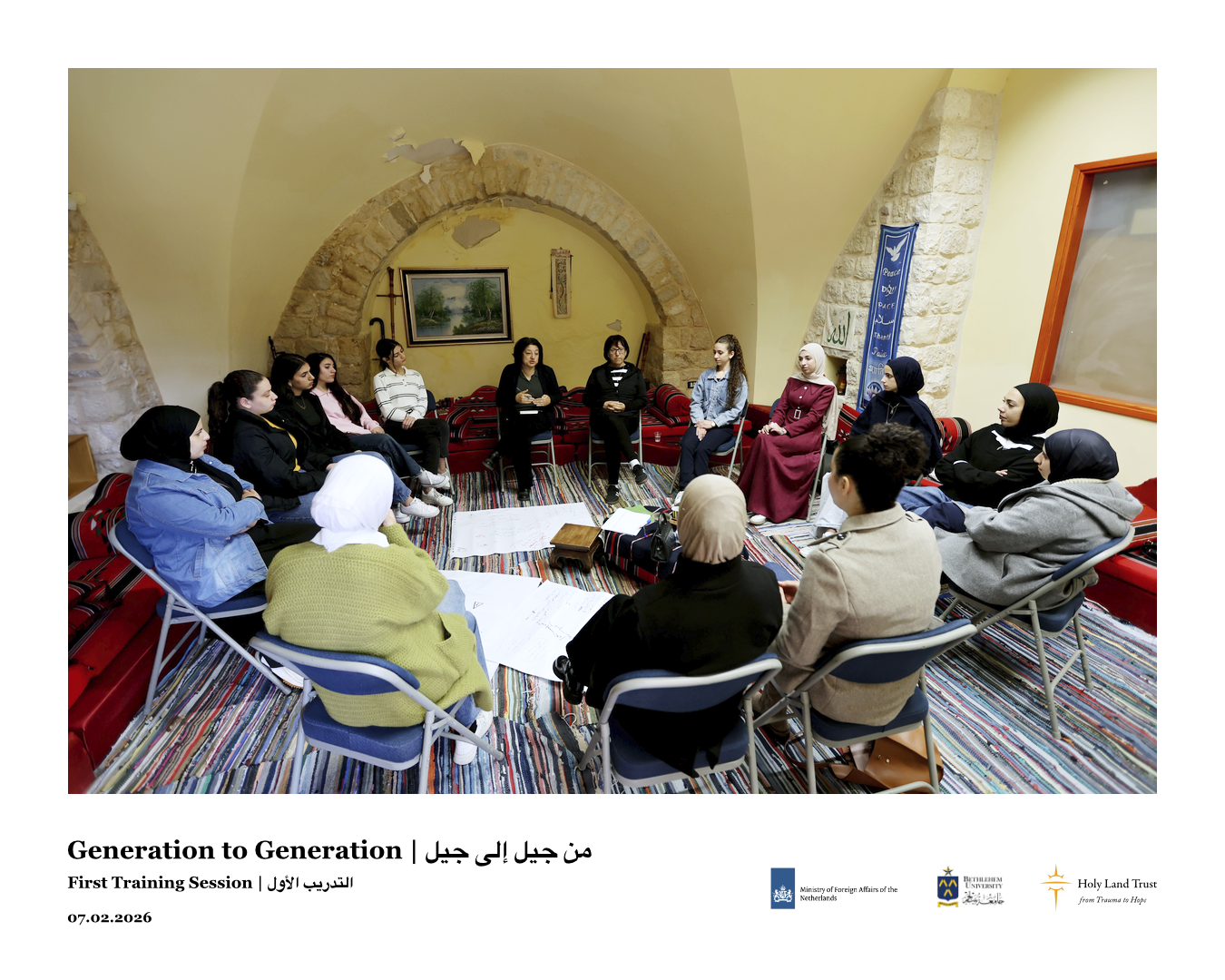
The first meeting took place at Holy Land Trust’s offices, with 13 female students from Bethlehem University and Al-Quds Open University participating out of 20 registered students.
The session served as an introductory meeting, allowing the students to get to know one another and begin building trust as a group. A central focus of the day was a listening and reflecting training, designed to prepare the participants for the upcoming spiritual questionnaire.
Through guided exercises, the students practiced deep listening — listening without judgment, interruption, or assumptions — and reflective sharing, where they learned how to mirror back what they heard with empathy and presence. This training laid the foundation for creating a safe space, strengthening connection among the participants, and honoring each woman’s voice and story .
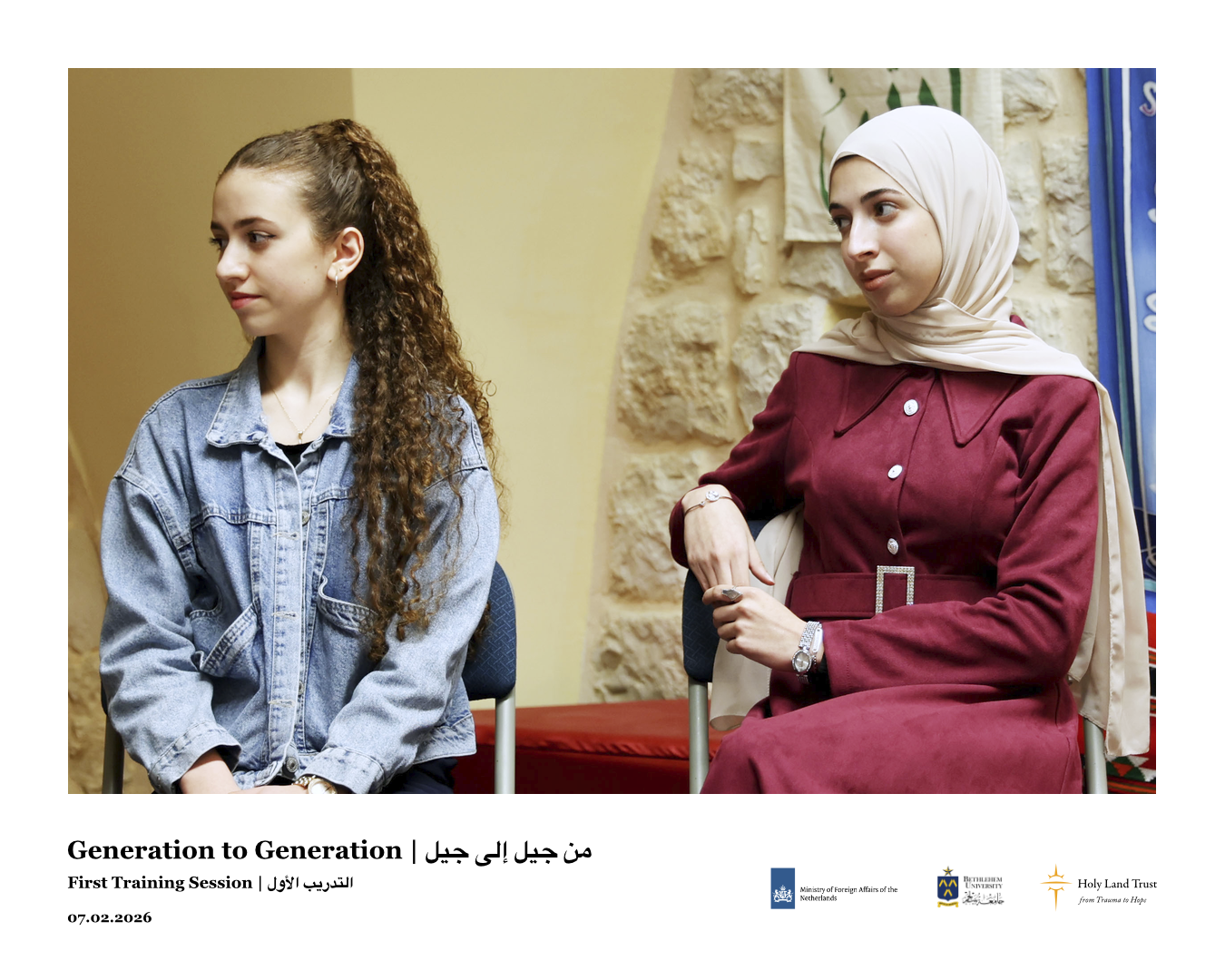
The students were divided into smaller groups to encourage participation, mutual support, and meaningful exchange — an important first step in the Generation to Generation journey.
This launch marks the beginning of a powerful process of storytelling, learning, and collective growth.

Your support enables Holy Land Trust to continue home rebuilding in Area C, strengthen the resilience of youth and girls, and expand the Community Preparedness Project, helping families anticipate challenges, stay rooted on their land, and respond together to political and structural pressures. Join us in fostering dignity, hope, and long-term community strength.
Your support helps families stay in their homes and gives young people the skills to face challenges. Every donation makes our communities stronger and more resilient.
Elias Deis,
EXECUTIVE DIRECTOR