
Women at the Heart of Change: From Trauma to Community Strength
” Our struggle is not only for our land, but for our dignity and the right to exist as free people. “
– Hanan Ashrawi, Palestinian legislator and activist
Across Jerusalem and the West Bank, Palestinian women carry the weight of sustaining their families and communities under conditions of occupation, political division, and socio-economic hardship. Yet, they are also powerful agents of change, mediators, and community leaders. This Women’s Day , Holy Land Trust celebrates their courage, resilience, and vision for a stronger, more cohesive society.
At Holy Land Trust, this belief in women’s leadership is not symbolic — it is structural and intentional. Out of seven Board members, four are women , giving women the majority and an active role in strategic direction, governance, and key decision-making processes. At the executive and programmaticlevels, women occupy core leadership and coordination positions, shaping the organization’s vision, partnerships, and program implementation. Wegenuinely believe in the transformative role of women’s leadership and the importance of protecting and expanding civic spaces where women can lead, influence policy, and drive community change.
Women of Dialogue: Reclaiming Civic Space This project empowers Palestinian women by equipping them with trauma-informed care, mediation, negotiation, and psychosocial support skills. Fourgroups of 20 women each from East Jerusalem and the West Bank receive training to design and lead initiatives that rebuild trust, promote social cohesion, and expand civic space. Through dialogue, rapid-response support, and community projects, these women strengthen connections across generations and regions, positioning themselves as visible leaders capable of fostering peace and resilience.
Generation to Generation Building on Holy Land Trust’s commitment to nurturing youth, the Generation to Generation program provides safe spaces for emotional expression, mentorship, and creative engagement. By connecting young females with local women leaders and role models, it encourages intergenerational learning, community responsibility, and empowerment. The program transforms trauma into hope, ensuring the next generation inherits not just stories of struggle, but tools for leadership and solidarity.
This Women’s Day, Holy Land Trust honors the women who stand at the forefront of civic action and community resilience—reminding us that supporting women’s leadership strengthens the whole society .
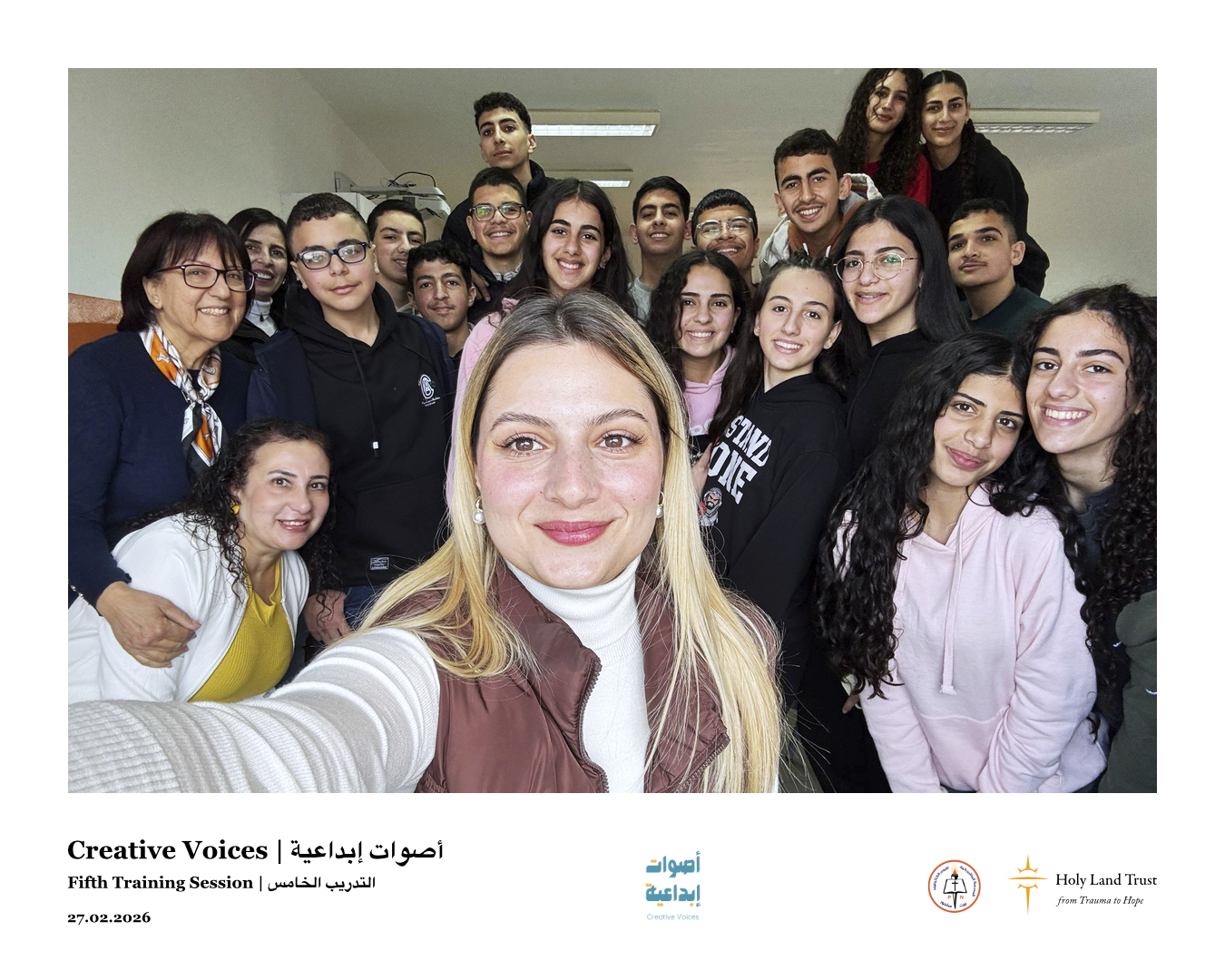
Holy Land Trust, in partnership with the Greek Catholic Patriarchate School Peter Nettekoven Beit Sahour , continues the implementation of the Creative Voices project for tenth-grade students.
The fifth training session was held on 27 February 2026. It was facilitated by Ms. Raghda Zgheir , and addressed future major selection and time management, highlighting transferable skills such as self-awareness, critical thinking, and planning for the future, as well as the importance of prioritizing and managing time effectively.
With each session, students take another step toward becoming confident, responsible leaders capable of shaping their future and contributing positively to their communities.
Holy Land Trust launched the Women for Dialogue – Safe Community Spaces for Palestinian Women project within a consortium of four Palestinian organizations. The project is funded by the European Union and implemented by Expertise France.
As part of the Bethlehem component, we began training sessions for a group of 20 women from the Bethlehem Governorate.
In partnership with Tomorrow’s Women organization, we delivered a two-day Compassionate Listening training led by expert Mrs. Lama Abu Arqoub . The first session took place face-to-face on Thursday, 26 February, at the Holy Land Trust offices, while the second session was held online via Zoom on Tuesday, 3 March, due to the current political situation.
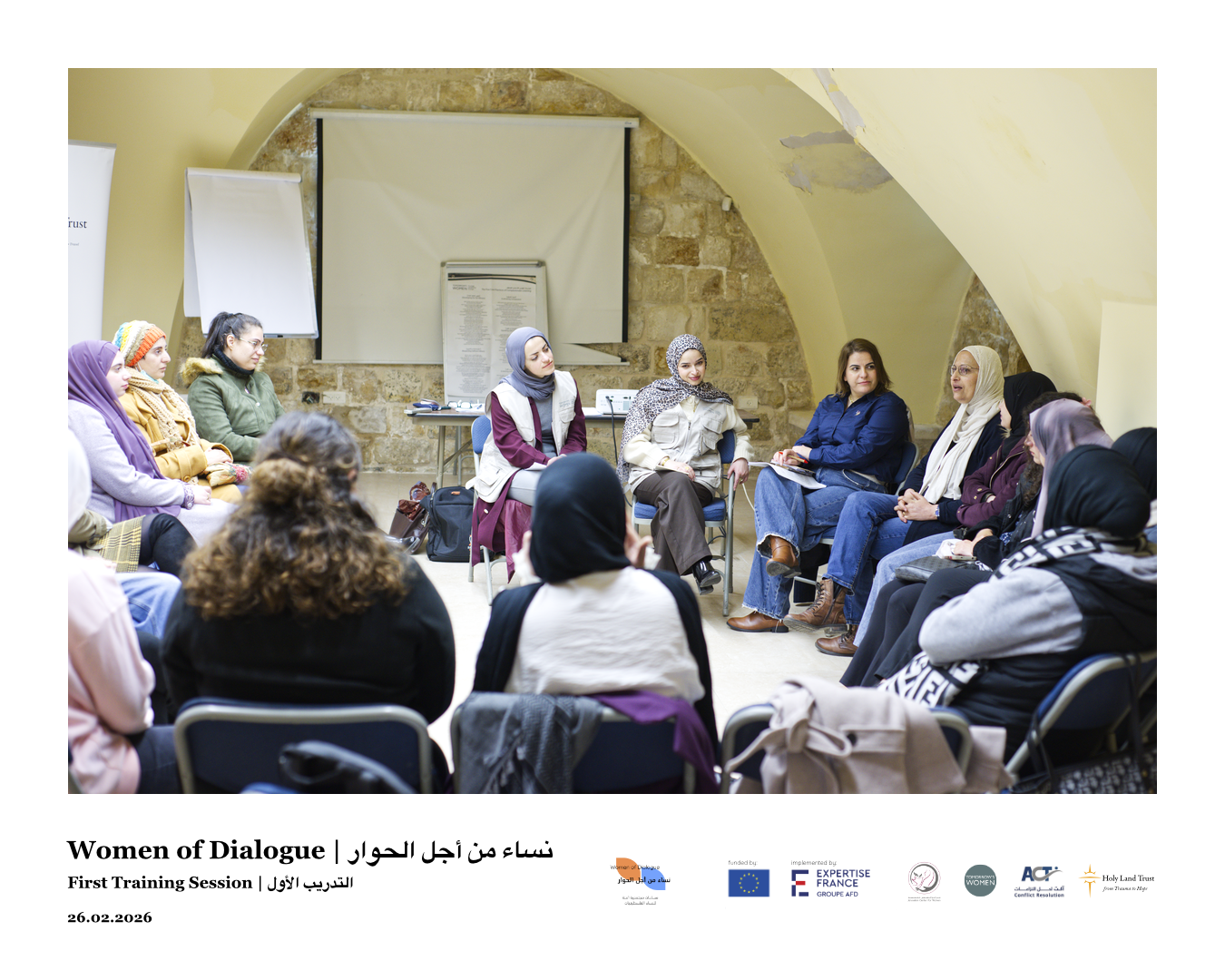
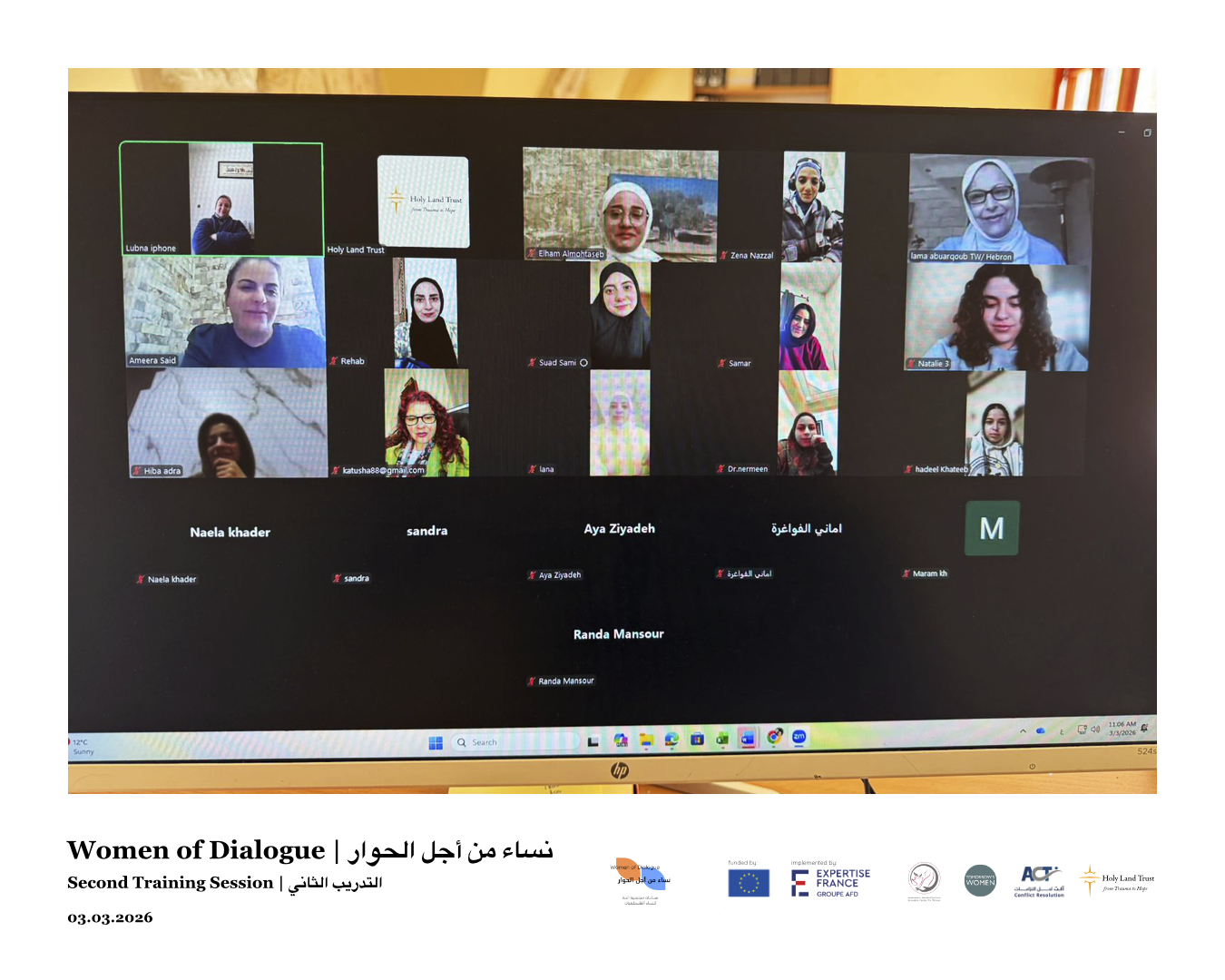
The training focused on deep empathy, emotional awareness, and constructive conflict transformation. Through exploring the five core practices and applying the Facts–Feelings–Values model, participants strengthened their ability to regulate triggers, listen from the heart, and speak with courage in a safe and inclusive space.
This marks the beginning of a journey to strengthen women’s leadership, dialogue capacity, and community engagement across Palestine.

Your support helps Palestinian women transform their communities through leadership, dialogue, and psychosocial care. By contributing, you enable programs like Women of Dialogue and Generation to Generation to provide training, safe spaces, and community initiatives that foster trust, resilience, and social cohesion across Jerusalem and the West Bank.
Seeing women lead initiatives that bring their communities together is the most inspiring part of my work at Holy Land Trust.
Elias Deis,
EXECUTIVE DIRECTOR