
“The land is our mother; we do not leave her.”
– Mahmoud Darwish
Land Day , marked annually on March 30, is not only a moment of remembrance. It is a living expression of identity, dignity, and the deep relationship between people and land.
On this day in 1976 , Palestinians organized a general strike to protest the confiscation of thousands of dunams of land in the Galilee. The protests were met with force — six unarmed Palestinians were killed, and many were injured and arrested. Since then, Land Day has become a symbol of resilience, unity, and the enduring connection between people and their land.
Land is not just territory. It is memory, belonging, and future.
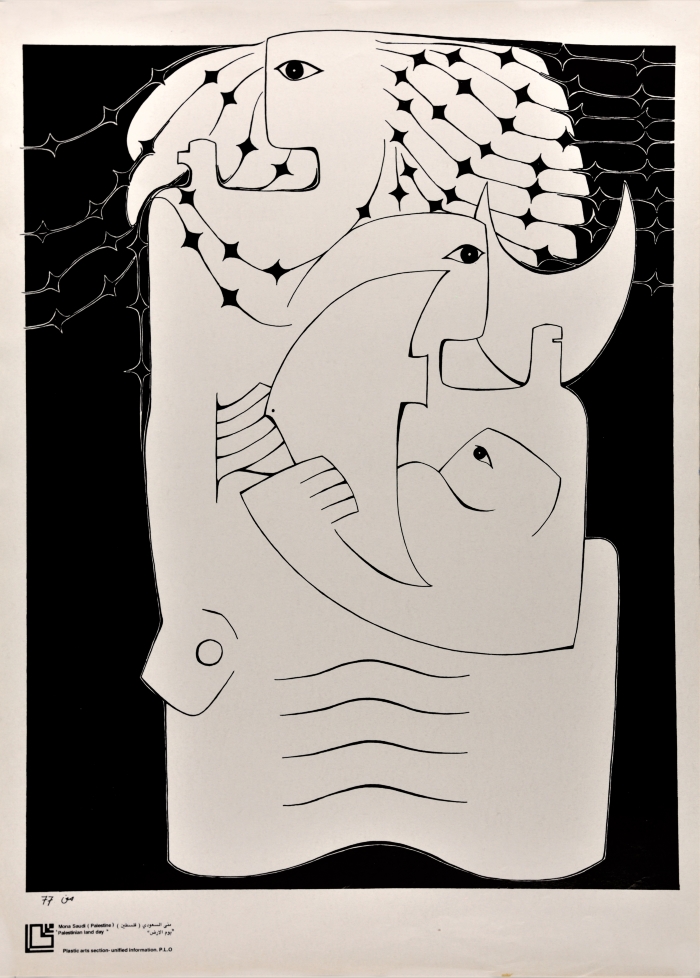
“ Land Day ” | Issued by the General Union of Palestinian Women on Land Day in 1977, this poster shows a cubist painting by Palestinian artist Mona al-Saudi . ( The Palestinian Museum Digital Archive )
At Holy Land Trust, Land Day resonates deeply with our mission. We see the land not only as something to defend, but as something to reconnect with, and build upon.
Across Palestine, this connection to land exists under continuous and intensifying pressure. Ongoing political realities shape daily life — restricting movement, limiting access to land and resources, and creating an environment of prolonged uncertainty. Economic hardship deepens this reality, as unemployment rises and traditional sources of income become increasingly unstable.
Communities also face growing social pressure. The accumulation of stress, fear, anger, and uncertainty affects not only livelihoods, but the emotional and psychological well-being of individuals and families. In many areas, escalating tensions and incidents of settler violence add another layer of insecurity, reinforcing a sense that stability remains out of reach.
The psychological, economic, and social burdens are not separate — they accumulate over time, creating a heavy and persistent reality. Life becomes a continuous cycle of endurance, where moments of stability are often brief and quickly disrupted.
And yet, despite this, people continue to hold on — to their land, their identity, and their determination to remain.
Across different regions of Palestine, this reality takes many forms. Whether in rural communities, urban centers, or areas under heightened restrictions, people navigate daily challenges that affect theirability to plan, to grow, and to feel secure.
Despite these conditions, communities continue to adapt, support one another, and find ways to remain connected to their land and to life itself. This persistence reflects not only resilience, but a deep-rooted commitment to staying, belonging, and continuing forward.
Land carries trauma — stories of loss, displacement, and struggle. Through trauma-informed and nonviolence-based approaches, Holy Land Trust creates spaces where individuals and communities can process these experiences and regain a sense of strength.
Healing our relationship with the land begins with what we build within ourselves and with each other.
From supporting families in cultivating their land to creating safe spaces for women and youth, this work affirms the right of Palestinians to remain, grow, and live with dignity. Resilience here is not abstract — it is practiced daily through presence, care, and action.
Through storytelling and global engagement, these voices are carried beyond borders — inviting others not only to witness, but to stand in solidarity. Because the struggle for land is ultimately a struggle for justice, humanity, and peace.
Land Day also calls for deeper awareness.
The earth is not only land beneath our feet — it is a living source that sustains life. Yet across the world, exploitation, control, and overconsumption continue to exhaust it.
This day invites us to pause… To return to a relationship of respect, care, and responsibility. To remember: we belong to the land — not the other way around.
This is not only a Palestinian story. Land is everywhere.
Medical Caravan for Umm Al-Khair
Community Support – Direct Aid
As part of our continued efforts to support community resilience in Area C , we have successfully installed a caravan in the village of Um Al-Khair , located in the southern Hebron Hills. This caravan will serve as a permanent clinic for the community, providing essential healthcare services.
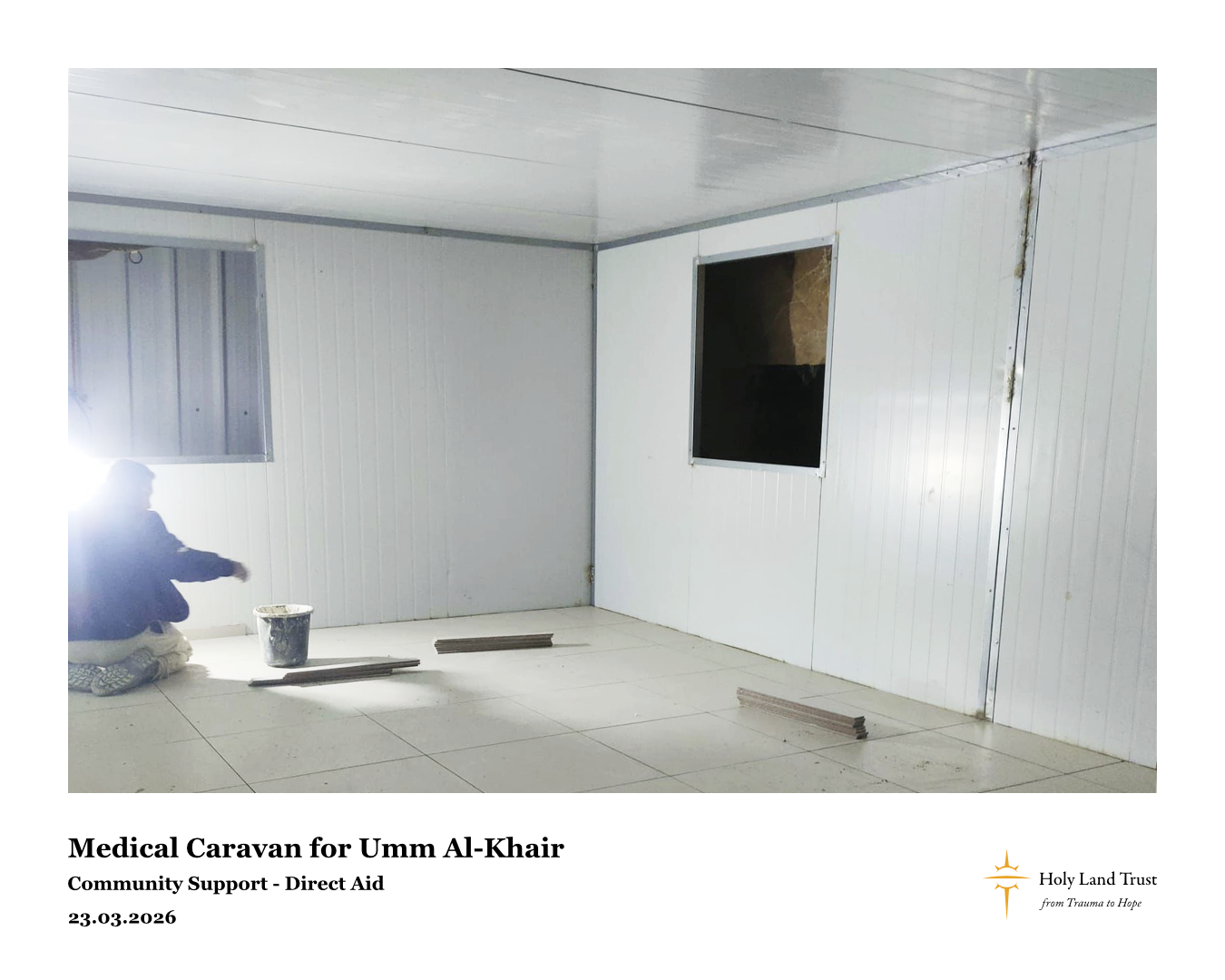
Through this initiative, children, pregnant women, and elderly residents will have access to visiting doctors on a weekly basis, ensuring consistent and much-needed medical care.
We would like to extend our sincere gratitude to our strategic partner, Amos Trust, for funding this initiative under the “ Direct Aid ” program of our “ Community Support ” pillar.

Families in Bethlehem are not only facing economic hardship—they are navigating a cycle of repeated disruption, where recovery is constantly interrupted. Your support helps provide consistency in an inconsistent reality: access to essential resources, safe spaces for expression, and programs that strengthen resilience.
Your contribution helps communities stand firm, even when everything around them feels unstable—supporting food security, empowering women, and creating opportunities for youth to lead and grow despite the challenges.
In a reality where everything can change overnight, standing with people consistently is what turns uncertainty into strength.
Lara Nassar Mitri,
COMMUNICATIONS COORDINATOR