
” Where should the birds fly after the last sky?
Where should the plants sleep after the last breath of air? “
– Mahmoud Darwish
Every year on May 15, Palestinians commemorate the Nakba of 1948 — the catastrophe that led to the displacement of hundreds of thousands of Palestinians from their homes, the destruction of entire villages, and the beginning of a reality that continues to shape Palestinian life until today.
But for Palestinians, the Nakba is not only a historical memory. It is an ongoing lived experience.
It lives in the uncertainty of everyday life under occupation. In the fear carried by families and children. In displacement, violence, separation, and loss. In the emotional and psychological weight carried across generations.
For many Palestinians, the Nakba is not simply about the loss of land. It is also about the loss of safety, stability, freedom, and the ability to imagine the future without fear.
Decades of occupation, recurring violence, forced displacement, restrictions on movement, and political instability have deeply affected the emotional and psychological wellbeing of Palestinian communities. These realities have created layers of collective trauma that continue to shape how people live, relate, dream, and survive.
And yet, despite everything, Palestinians continue to hold on to life .
At Holy Land Trust, we believe that healing and hope are essential forms of resilience. Our work is rooted in supporting individuals and communities in transforming trauma, fear, and pressure into spaces of dignity, connection, empowerment, and hope.
Through trauma-informed approaches, leadership development, creative expression, psychosocial support, and community-based initiatives, Holy Land Trust empowers Palestinian individuals and communities to transform trauma into hope and constructive action. We work alongside communities across Palestine — especially youth, children, women, and communities exposed to violence, marginalization, and displacement — to strengthen resilience, promote social cohesion, and support pathways toward dignity, safety, and sustainable wellbeing.
We believe that every person deserves to feel safe. Every child deserves the right to dream. Every family deserves dignity and stability. And every community deserves the opportunity to heal and live freely.
On this Nakba m emorial , we remember not only what was lost, but also the strength of those who continue to endure, rebuild, create, and hope.
Because even in the darkest moments, the human spirit continues to search for light.
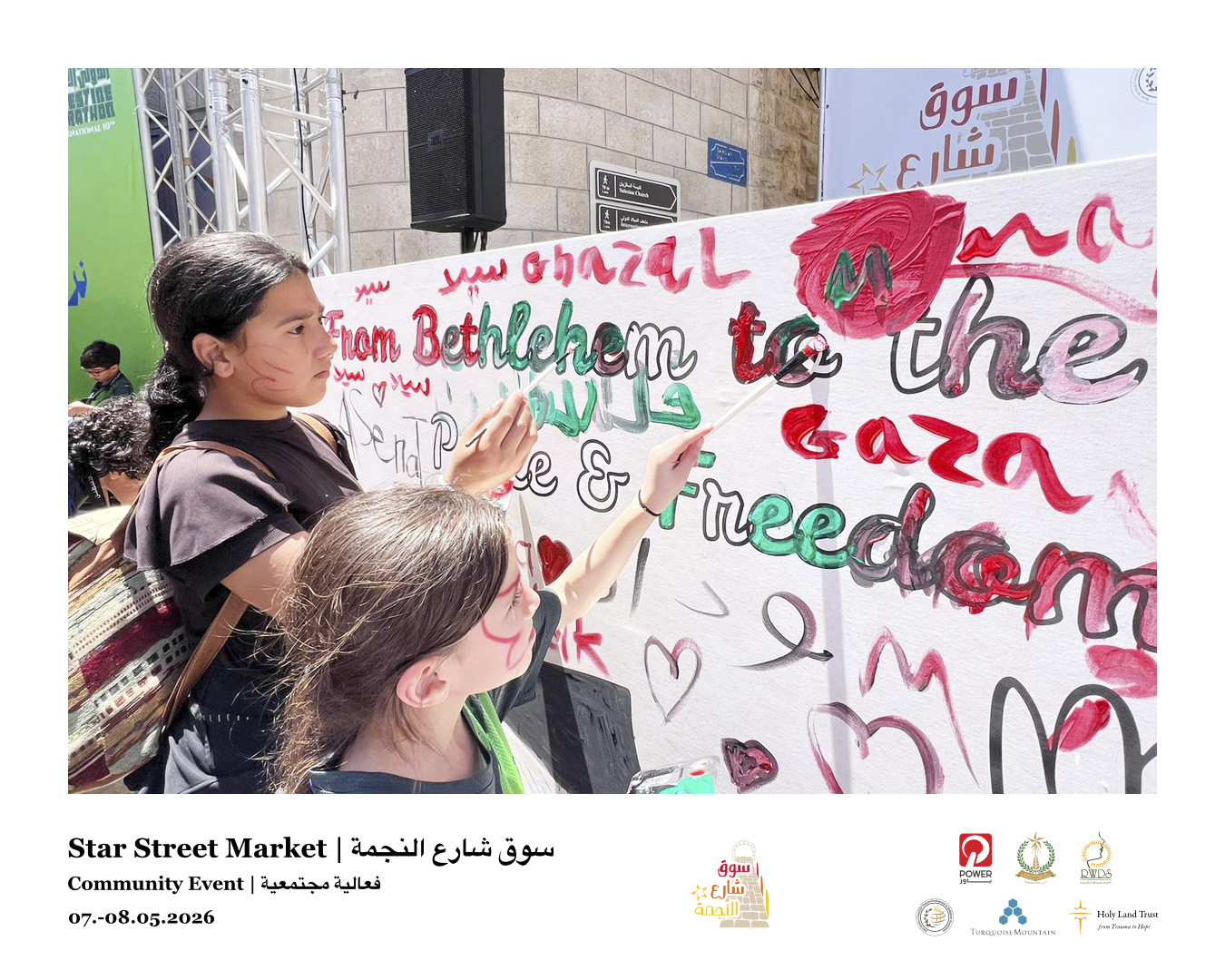
The event aimed to revive the community and cultural spirit of Bethlehem by creating a joyful and safe space for families, youth, and children following the difficult conditions caused by recent wars and ongoing challenges. Over 3,000 people attended the two-day event, which featured artistic and cultural activities, local artisans, music, performances, and community gatherings that celebrated hope, creativity, and Palestinian identity.
Holy Land Trust continued implementing the Art & Sumud بالفنّ نصمد Training of Trainers (ToT) series in partnership with the Austrian Institut für Trauma-Kunst-Therapie through an intensive online training held from May 7–9, 2026, bringing together 10 Palestinian participants from the West Bank, Jerusalem, and Gaza.
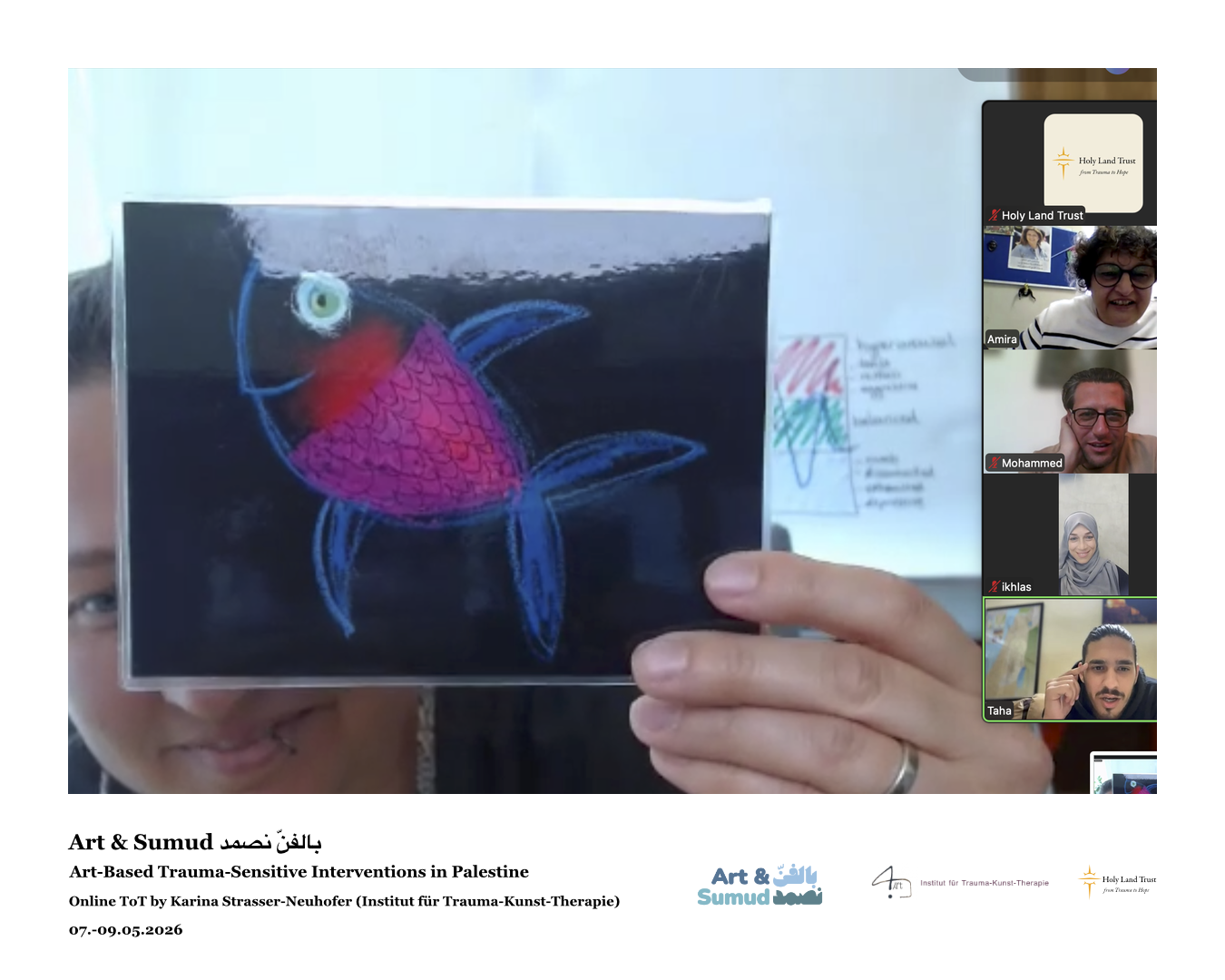
Led by trauma art therapist Karina Strasser-Neuhofer , the training focused on practical trauma-sensitive approaches that use art as a tool for psychosocial support, emotional expression, healing, and community resilience within the Palestinian context.
As part of the Women of Dialogue: Reclaiming Civic Space and Building Community Resilience in Jerusalem and the West Bank project, implemented by Holy Land Trust in partnership with ACT for Conflict Resolution , Jerusalem Center for Women , and Tomorrow’s Women , and funded by the European Union through Expertise France , a series of trainings and psychosocial support sessions were held in Bethlehem and Jerusalem between April 30 and May 14, 2026.
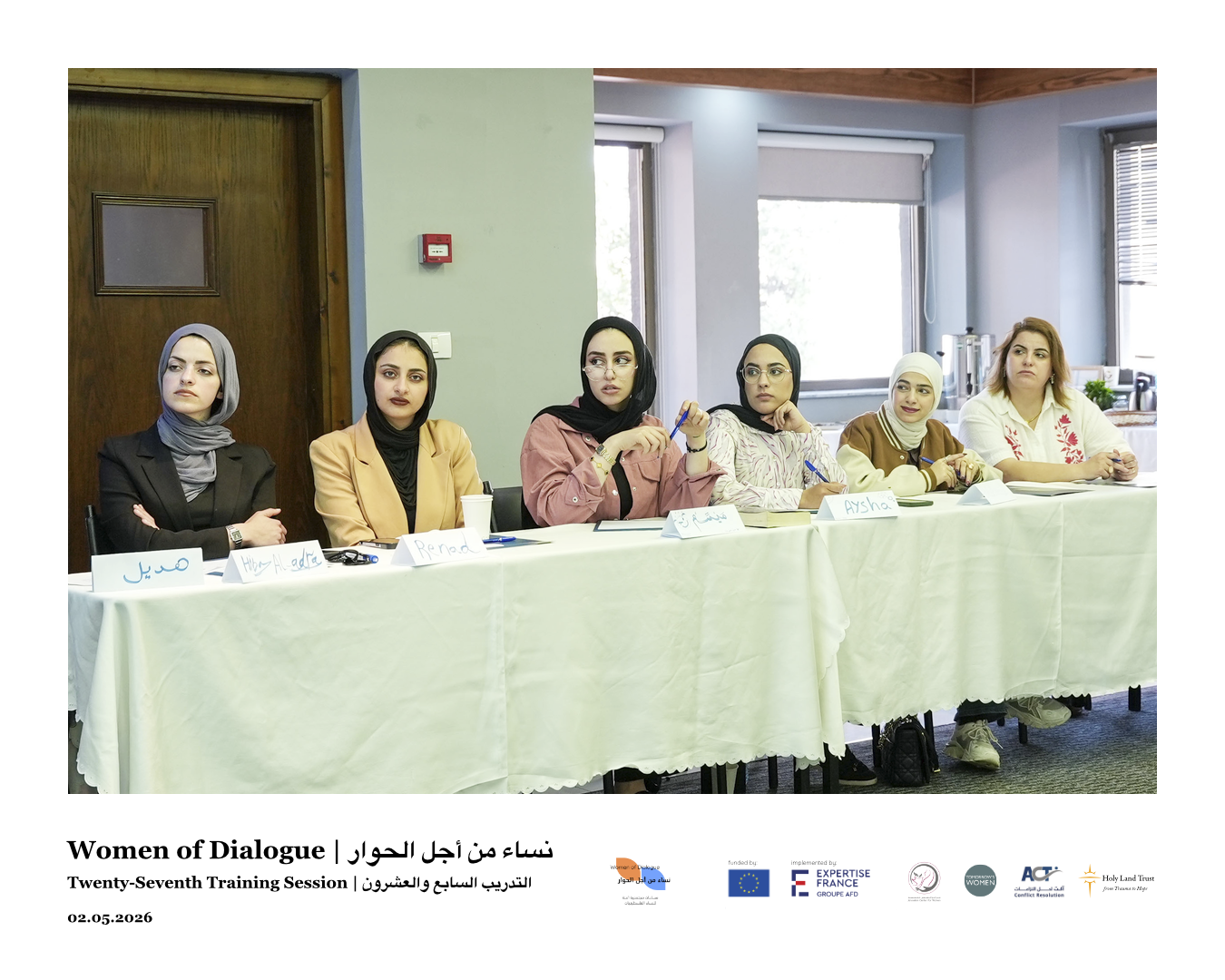
The activities focused on social cohesion , psychosocial support , mediation , and negotiation , creating safe spaces for women to strengthen communication skills, emotional wellbeing, dialogue, and peaceful conflict engagement through interactive exercises and discussions grounded in resilience and nonviolence.
As part of the ongoing Creative Voices project implemented by Holy Land Trust in partnership with Greek Catholic Patriarchate School Peter Nettekoven Beit Sahour , a special outdoor activity was held in the Cremisan area on May 8, 2026, with the participation of tenth-grade students.
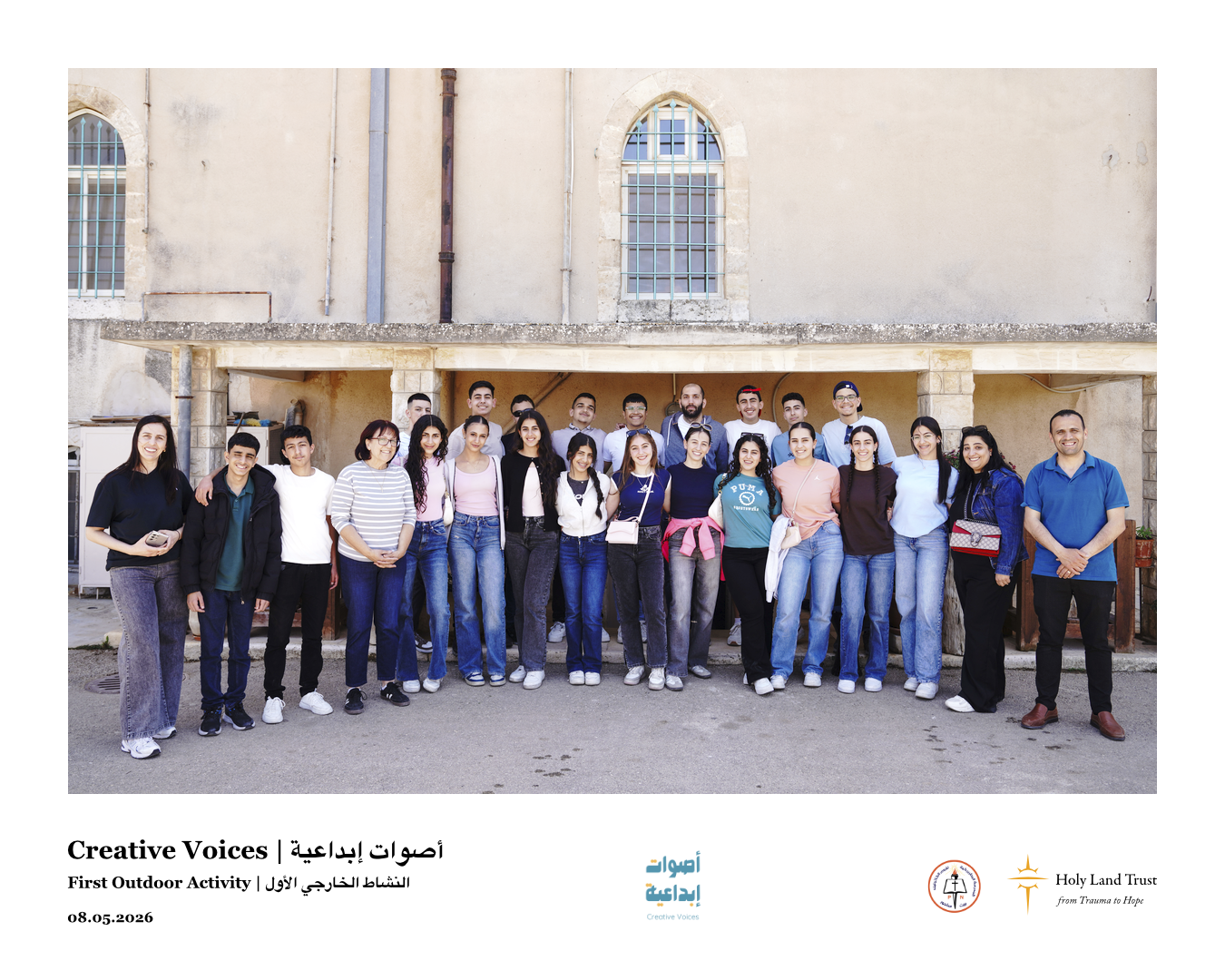
Led by life coach Issa Hayek , the activities focused on self-awareness, discovering personal strengths, and encouraging self-confidence, teamwork, positive communication, and joyful engagement through interactive exercises and group activities.
As part of the Generation to Generation (5th Edition) project, implemented by Holy Land Trust in partnership with Bethlehem University and funded by the Ministry of Foreign Affairs of the Netherlands , participants continued engaging in reflective and educational sessions in Bethlehem during May 2026.
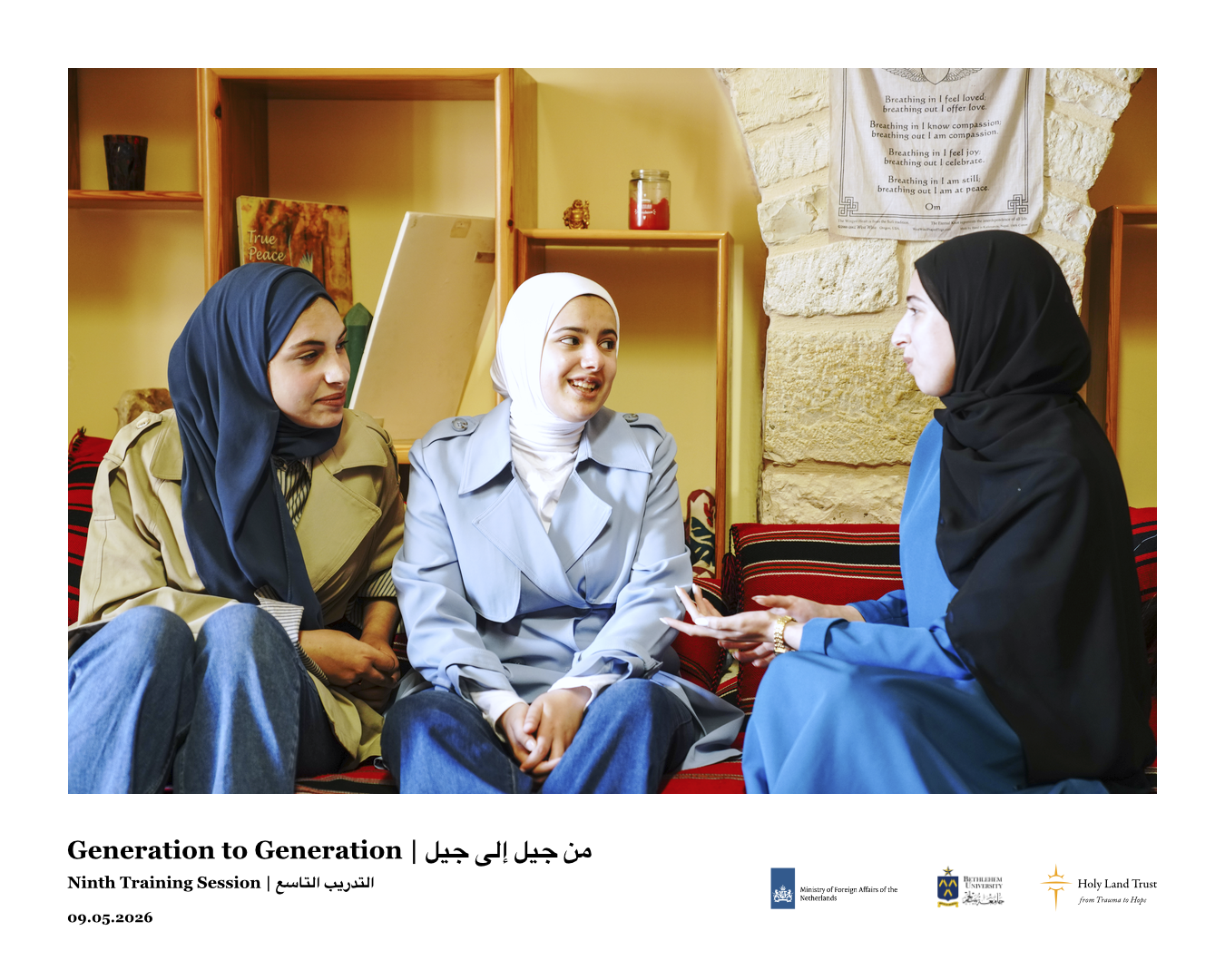
The activities included a Spiritual Questionnaire and Self-Reflection session facilitated by Mai Jaber , as well as a Nonviolent Communication (NVC) training facilitated by Amal Hadweh with 19 participants. The sessions encouraged self-awareness, compassionate communication, empathetic listening, and healthier dialogue within the community.

In the midst of ongoing trauma and uncertainty, Holy Land Trust continues supporting Palestinian youth, women, children, and vulnerable communities through trauma-informed programs, psychosocial support, leadership development, and community resilience initiatives.
Your donation helps us continue creating spaces for healing, dignity, hope, and empowerment across Palestine.
Stand with Palestinian communities — support our ongoing programs today.
Even in the midst of pain, uncertainty, and ongoing trauma, we continue to believe in the power of humanity, resilience, and hope. Our work is not only about responding to suffering — it is about protecting dignity, strengthening communities, and helping people rediscover their ability to heal, connect, and dream again.
Elias Deis,
EXECUTIVE DIRECTOR