


“I never thought I would be farming like my grandparents, but having a home garden is not only economical, it is something that is ours.”
– Hanin Rizaqallah, West Bank farmer and community entrepreneur
The olive harvest is far more than a season—it is the lifeblood of Palestinian communities across the West Bank. Every olive tree, every grove, every ancestral plot is a living testament to identity, roots, and culture. Generations of families have tended these lands, connecting not just to their livelihoods but to their very history and dignity.
Yet, this vital tradition is under constant threat . Settler violence intensifies during the harvest, harassing farmers, blocking access, and destroying trees—attacks that strike at the heart of Palestinian life and heritage. Our Quick Impact Support Project on Olive Harvest Protection steps in as a shield, providing practical safety guidance, emergency equipment, and volunteer support. This is not simply about protecting crops; it is about defending a people, their identity, and their enduring bond to the land.
Today, over a century later, the legacy of dispossession continues, visible in the escalating settler violence that Palestinian farmers endure during the olive harvest. Lands are being confiscated, trees uprooted, and livelihoods destroyed. But despite fear and loss, Palestinian communities remain steadfast, connected to their trees as to their own identity and heritage .
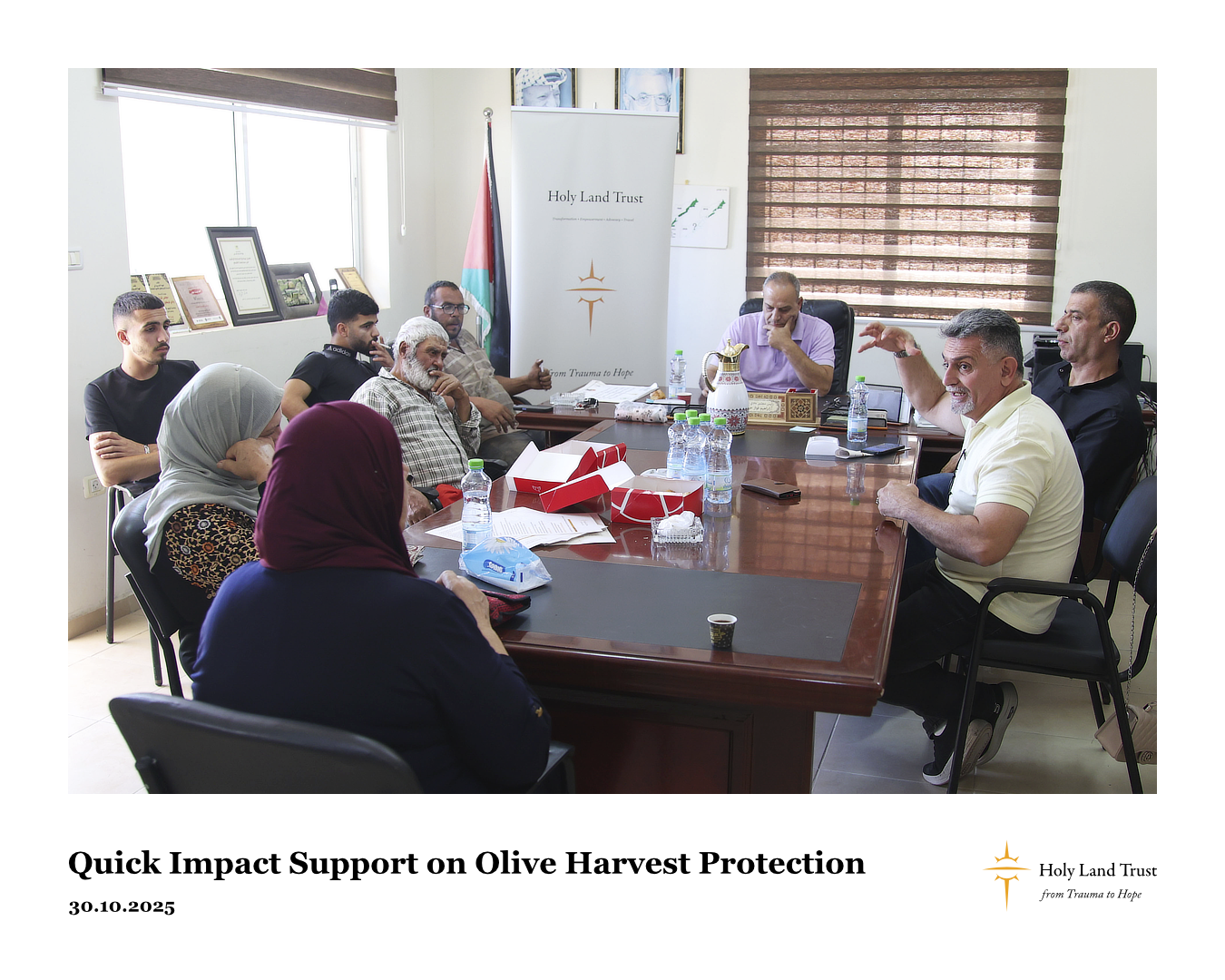
As part of its ongoing commitment to protect Palestinian communities and strengthen farmers’ resilience, Holy Land Trust has begun implementing the Quick Impact Support Project on Olive Harvest Protection , responding to the increasing settler attacks during the olive harvest season — particularly in Area C.
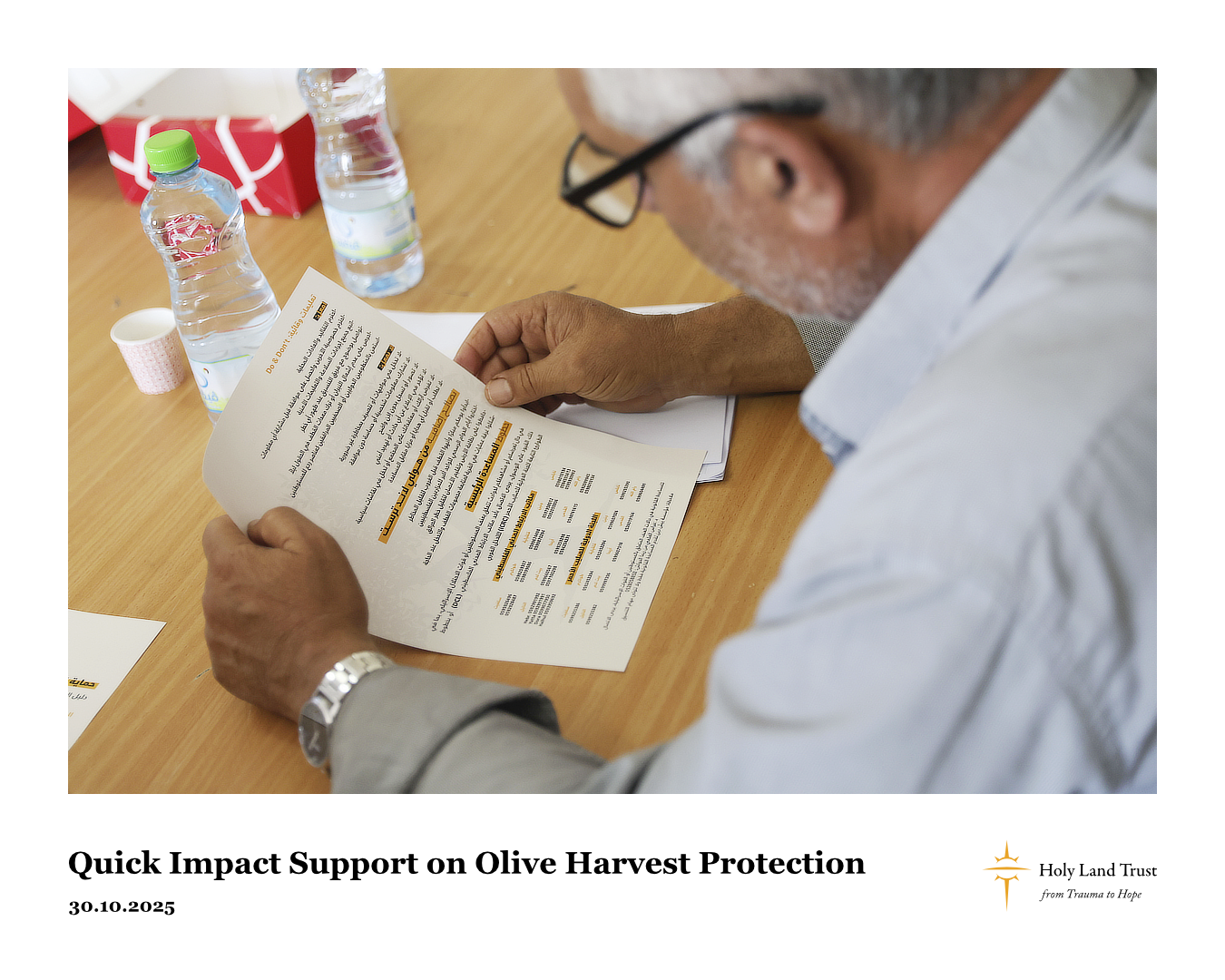
The project began with a rapid field assessment across eight vulnerable communities that face repeated harassment and land violations. Based on the findings, Best Practices Guidelines and Instructions were developed to support farmers’ safety, legal awareness, and coordination during the harvest.
These guidelines include legal advice , public safety measures , and coordination protocols between farmers, village councils, and protection institutions. The materials were prepared in close cooperation with the Palestinian Police, the Palestinian Civil Defense, and several specialized partners.
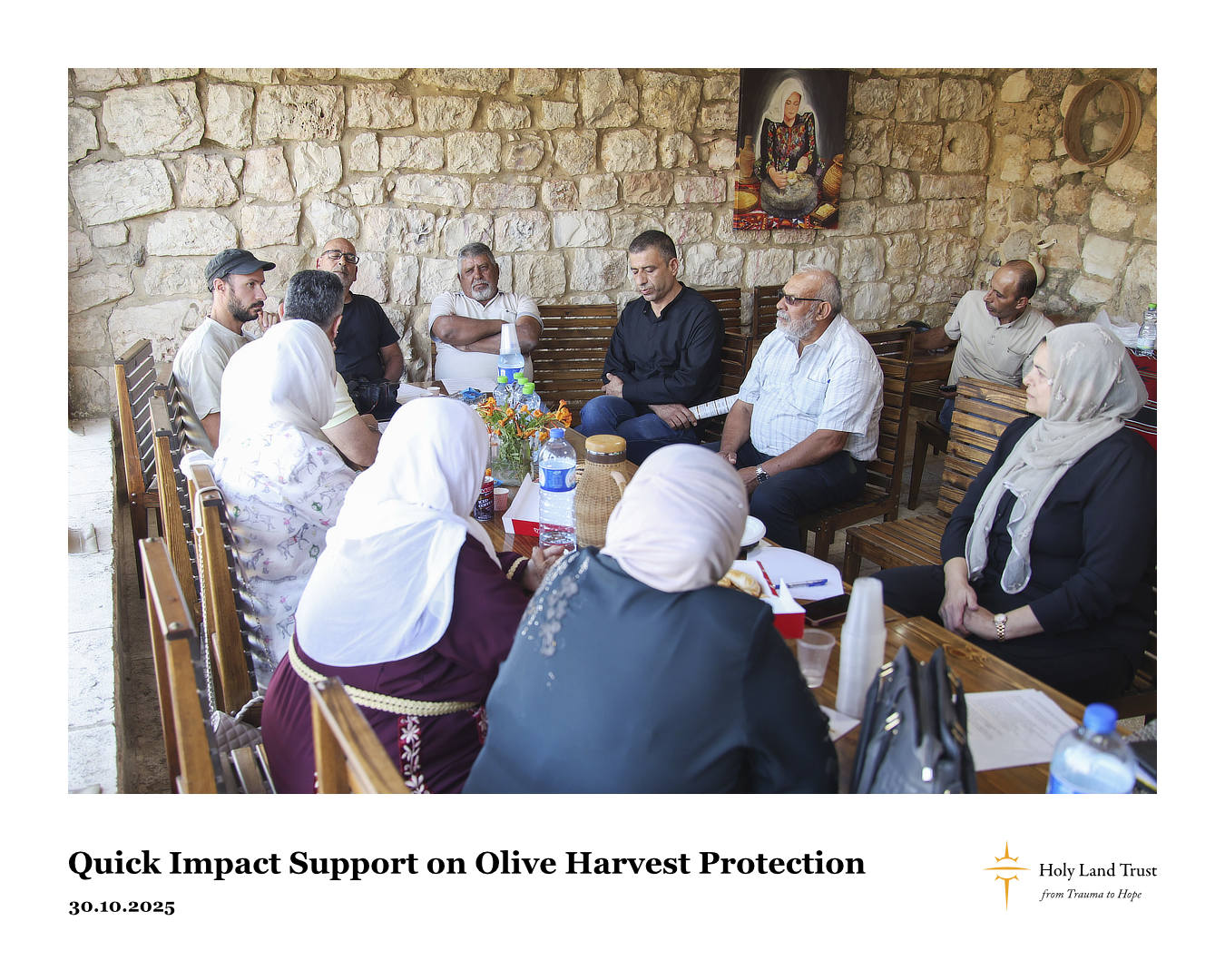
In the first phase , the guidelines have been distributed through village councils in four key communities — Battir, Wadi Rahhal, Nahalin, and Wadi Fukin — as part of Holy Land Trust’s mission to promote nonviolence, protect livelihoods, and strengthen community resilience in the face of ongoing challenges.
From Historical Injustice to Present-Day Resilience
The Balfour Declaration of 1917 , issued by the British government, stated that “His Majesty’s Government view with favour the establishment in Palestine of a national home for the Jewish people, and will use their best endeavours to facilitate the achievement of this object, it being clearly understood that nothing shall be done which may prejudice the civil and religious rights of existing non-Jewish communities in Palestine.”
Yet, despite this apparent recognition, the Declaration and its legacy treated Palestine as “ a land without a people ,” erasing centuries of Palestinian presence, culture, and deep connection to the land .
Today, nothing could be further from the truth. Palestinians remain inseparable from their homeland—olive groves, vineyards, and ancestral plots are not just sources of livelihood; they are living symbols of identity, belonging, and resilience. Each tree tells a story; each harvest binds families to their heritage.
Yet, this intimate relationship with the land is under direct threat. During the olive harvest, settler violence escalates, placing farmers, volunteers, and communities at risk. Harassment, obstruction, and the destruction of trees are attacks not just on livelihoods but on the very identity of Palestinian communities.
Our Quick Impact Support Project on Olive Harvest Protection is a vital lifeline. By providing practical safety guidance, emergency equipment, and volunteer support, the project empowers communities to protect their land, harvest, and heritage. This intervention ensures that Palestinians can continue caring for the land that defines them while preserving their culture and dignity. Protecting the harvest today is an act of safeguarding generations of identity, resilience, and connection to the land.
Building on the success of Generation to Generation , Holy Land Trust proudly launches Generation to Generation – Junior , a new initiative with students from Talitha Kumi School , Grades 10 and 11.
This program continues Holy Land Trust’s transformative journey with the younger generation by creating a safe and supportive space where students can explore their emotions, express their fears and anxieties, and discover their inner strength through storytelling, writing, and photography.
By learning from and documenting the stories of the older generation, participants will connect with their heritage, draw inspiration from the resilience of their ancestors, and become young custodians of the Palestinian story —a story of hope, creativity, and dignity.
Support farmers, volunteers, and the next generation of Palestinian storytellers this olive harvest season. Tog ether, we protect not just the harvest, but the identity, roots, and enduring spirit of the Palestinian people.

During the olive harvest, Palestinian farmers face escalating settler violence that threatens their land, livelihood, and identity.
Your support helps provide practical safety guidance, emergency equipment, and volunteer assistance, ensuring communities can protect their trees and traditions.
Join us in safeguarding the harvest and empowering the next generation through Generation to Generation – Junior .
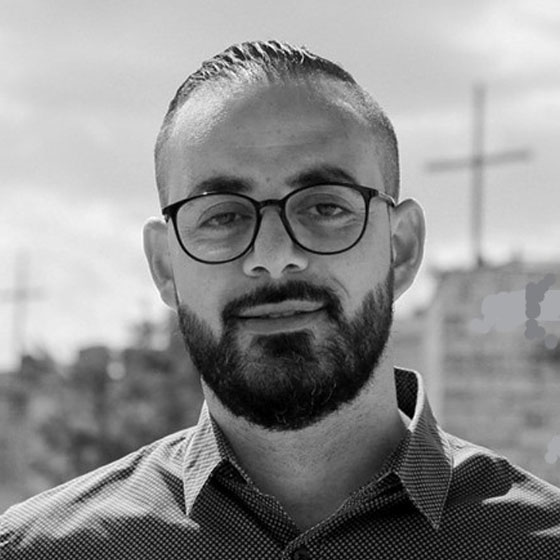
The olive harvest is our story of resilience. Through the Quick Impact Support Project, we’re protecting Palestinian farmers from settler attacks — and we call on the international community to stand with us now.
Elias Deis,
EXECUTIVE DIRECTOR

“Support” embodies the unity and collective strength of Palestinian communities standing together to protect their land, preserve their olive trees, and defend their right to live freely on their ancestral soil.
Holy Land Trust
© 2025 Holy Land Trust